
Anúncios
The global classroom has undergone a seismic shift, transforming from traditional brick-and-mortar institutions to a dynamic, interconnected digital landscape. This evolution isn’t merely about convenience; it represents a basic redefinition of access, pedagogy, and lifelong learning. As technology continues its relentless march forward, digital education stands at the forefront, promising to unlock exceptional opportunities while simultaneously presenting complex challenges. Are we prepared for a future where learning is ubiquitous and infinitely personalized?
For decades, education remained largely confined by geographical and socioeconomic boundaries. the advent of widespread internet access and refined digital tools has shattered these limitations, democratizing knowledge on an historic scale. From remote villages gaining access to world-class lectures to professionals upskilling for rapidly evolving industries, digital education is proving to be a powerful equalizer. This paradigm shift requires a fresh look at how we conceive of learning, teaching, and credentialing in a perpetually changing world.
Anúncios
This article delves into the most impactful trends shaping digital education today. We will explore how AI is revolutionizing personalized learning, the immersive potential of VR and AR, and the critical role of micro-credentials in fostering lifelong skill development. we’ll examine the evolving responsibilities of educators and the ongoing efforts to bridge the persistent digital divide, ensuring that the promise of accessible education reaches every corner of the globe.
Redefining Access: Digital Education’s Global Reach
Forget the ivory tower; learning is now everywhere. Digital education is fundamentally shifting who gets to learn and where, shattering traditional barriers that once dictated academic opportunity. What most people miss is how profoundly this impacts communities far removed from urban centers. Consider the sheer scale: online course enrollment has surged, with Coursera reporting over 113 million registered learners globally as of early this year. That’s a staggering 25% increase from just a few years prior, illustrating a clear appetite for flexible, accessible learning. This isn’t just about convenience; it’s about survival for many seeking new skills in a rapidly changing job market. For instance, the rise of remote work has pushed many to reskill, a trend explored in depth by analyses on the future of work.
Anúncios
Bridging the Digital Divide: Equity in Online Learning
The promise of universal access, clashes with a stark reality: the digital divide persists. Even with widespread internet, disparities in device ownership and connection quality disproportionately affect rural areas and lower-income households. The data suggests—though not conclusively across all regions—that approximately 37% of the world’s population, or 2.9 billion people, remain offline, according to the ITU’s 2021 estimates. How can digital education be global if so many are excluded from the start? Initiatives designed to close this gap are gaining traction. Projects like “One Laptop Per Child” (OLPC), while facing challenges, showed the potential of hardware distribution. More recently, organizations such as the Khan Academy and local NGOs are deploying offline learning modules and community tech centers, proving that innovative solutions can circumvent connectivity issues. Dr. Anya Sharma, an expert in educational technology at UNESCO, emphasizes that “equitable access isn’t just about internet; it’s about culturally relevant content and support systems that acknowledge diverse learning environments.” Without these targeted efforts, digital education risks exacerbating existing inequalities, rather than solving them. This complexity is similar to the challenges faced in ensuring food security, where local contexts dictate effective solutions.
AI and Personalization: The Next Frontier in Learning
Could a machine understand how you learn better than you do? Artificial Intelligence is quickly reshaping digital education, moving beyond simple content delivery to create deeply personalized learning experiences. This shift, often overlooked, promises to revolutionize how students engage with material and achieve their academic goals.
Adaptive Learning Platforms: Tailoring Content to Students
Adaptive learning platforms are at the forefront of this transformation. These systems use AI algorithms to analyze a student’s performance, strengths, and weaknesses in real-time. They then dynamically adjust the curriculum, presenting content, exercises, and assessments tailored to individual needs. This isn’t just about pace; it’s about optimizing the learning path itself. For instance, Knewton Alta, a prominent adaptive learning platform, boasts that students using its system achieve proficiency 23% faster than those in traditional courses, according to internal studies. What most people miss is that this speed isn’t about rushing; it’s about efficient allocation of effort. Imagine a student struggling with algebra; the system identifies specific gaps and provides targeted practice, rather than forcing them through an entire chapter they already grasp. This focused approach can dramatically improve outcomes.
Intelligent Tutoring Systems: AI as a Personal Mentor
Intelligent Tutoring Systems (ITS) take personalization a step further, acting as virtual one-on-one mentors. These AI-powered tools provide immediate feedback, answer questions, and even detect emotional states to adjust their instructional style. They are designed to mimic the interaction a student might have with a human tutor. Carnegie Learning’s MATHia, for example, is an ITS that uses cognitive science and AI to provide personalized instruction for mathematics. It tracks thousands of data points for each student, allowing it to offer hints, explanations, and alternative strategies precisely when needed. This level of granular support is simply impossible in a traditional classroom setting, where a single teacher manages dozens of students.
Benefits and Challenges of AI Integration
The benefits of AI in education are compelling: increased student engagement, improved academic performance, and greater access to high-quality, individualized instruction. According to a report by the World Economic Forum, AI could boost global GDP by 14% by 2030, with significant contributions from sectors like education. The data suggests—though not conclusively—that AI tools contribute significantly to this uplift by making education more efficient and effective. challenges remain. Implementing AI solutions requires significant investment in technology and teacher training. There are also ethical considerations around data privacy and algorithmic bias. Could an AI unintentionally reinforce existing inequalities? I suspect that ensuring equitable access and preventing bias will be critical for widespread adoption. the human element of teaching—the empathy, the unexpected inspiration—is something AI cannot replicate.
Data-Driven Insights for Educational Improvement
Beyond individual student support, AI also offers powerful tools for educators and administrators. These systems collect vast amounts of data on student performance, engagement patterns, and learning efficacy. This data can then be analyzed to identify broader trends, pinpoint curriculum weaknesses, and inform pedagogical strategies. It’s like having a constant feedback loop for the entire educational system. For example, a university might use AI analytics to discover that students consistently struggle with a particular module in an online course. This insight allows instructors to revise the content, offer additional resources, or modify their teaching approach, leading to better outcomes for future cohorts. This kind of systemic improvement is important for institutions navigating tomorrow’s workforce and ensuring graduates are prepared. Ultimately, the integration of AI isn’t just about individual learning; it’s about continually refining the entire educational ecosystem, which can have profound implications for global supply chains and economic development as well.
Equitable access isn’t just about internet; it’s about culturally relevant content and support systems that acknowledge diverse learning environments.
— Dr. Anya Sharma, Expert in Educational Technology at UNESCO
| Trend | Key Aspect | Impact on Education |
|---|---|---|
| Redefining Access | Global Reach & Bridging Digital Divide | Democratizes learning, but requires targeted efforts to ensure equity. |
| AI & Personalization | Adaptive Platforms & Intelligent Tutoring | Tailors content, improves engagement, and accelerates proficiency. |
| Immersive Learning | VR, AR & Gamification | Enhances comprehension, makes abstract concepts tangible, boosts engagement. |
| Evolving Role of Educators | Digital Pedagogy & Facilitation | Requires new skills in tech, data analysis, and content creation; shifts focus to guidance. |
| Micro-credentials | Short-Form Learning & Skill Development | Provides agile, in-demand skills for a dynamic job market; prioritizes practical ability. |
Immersive Learning: VR, AR, and Gamification
Forget passive lectures; digital education is now demanding your full attention. How can we capture a learner’s imagination in an increasingly distracted world? The answer lies in technologies that blend the digital with the tactile, forcing engagement through sheer immersion.
Virtual Classrooms and Field Trips: Beyond the Physical
Virtual Reality (VR) is ripping down the walls of traditional classrooms, transporting students to places and times previously unimaginable. Imagine dissecting a virtual frog without the mess or exploring ancient Rome from your living room. What most people miss is the true potential for empathy and understanding that VR fosters. Consider the University of Michigan’s “VR Anatomy” program, which reported a 25% increase in student engagement compared to traditional methods, according to a 2022 study published in the *Journal of Medical Education*. The data suggests—though not conclusively across all subjects—that VR can significantly deepen comprehension. It’s like comparing a map to actually walking the terrain. One particularly compelling example comes from the “VictoryXR” platform, offering virtual field trips to places like the surface of Mars or the inside of a human heart. These aren’t just novelties; they are necessary tools for preparing students for a future where digital fluency is major, especially when considering shifts in global mobility. For educators considering VR, a good starting point is understanding the content available and the hardware requirements.
Augmented Reality: Bringing Concepts to Life
Augmented Reality (AR) takes the world around us and layers digital information onto it, making abstract concepts tangible. Unlike VR, which fully immerses you, AR enhances your current environment. Think of students holding up a tablet to a textbook and seeing a 3D model of a cell pop out, rotating and explaining its functions. Dr. Emily Carter, an educational technologist at Stanford University, frequently emphasizes that “AR bridges the gap between theoretical knowledge and practical application, making learning less about memorization and more about interaction.” Consider “Merge Cube,” a simple foam cube that transforms into a holographic object when viewed through a smartphone, allowing students to hold and manipulate virtual artifacts. This kind of interaction can drastically improve understanding, especially in STEM fields. A pilot program in a California high school using AR for chemistry experiments saw a 17% improvement in test scores for participants compared to control groups, illustrating its concrete impact. As we navigate the complexities of future work trends, these hands-on, digitally enhanced experiences become invaluable. Here’s a quick checklist for educators thinking about adopting immersive technologies:
- Define Learning Objectives: What specific outcomes do you want to achieve?
- Assess Infrastructure: Do you have the necessary devices, connectivity, and IT support?
- Content Availability: Are there existing VR/AR applications that align with your curriculum?
- Teacher Training: Are educators comfortable and skilled in using new technologies?
- Pilot Programs: Start small, gather feedback, and iterate before a full rollout.
- Budget Allocation: Account for hardware, software licenses, and ongoing maintenance.
These technologies aren’t just futuristic; they are currently reshaping how knowledge is acquired and retained. The real challenge, then, isn’t whether to adopt them, but how to integrate them effectively into an evolving educational landscape.
The Evolving Role of Educators in a Digital Landscape
The shift to digital platforms has fundamentally reshaped what it means to teach. Are educators merely content deliverers now, or something more? This transformation demands a new set of skills, far beyond traditional classroom management. Consider the increasing emphasis on digital pedagogy, which involves designing learning experiences specifically for online environments. What most people miss is how demanding this shift is. Teachers now need proficiency in learning management systems, data analytics to track student progress, and expertise in creating interactive multimedia content. Dr. Evelyn Reed, a leading expert in educational technology at Stanford University, argues, “The future educator acts as a facilitator and curriculum designer, guiding students through personalized learning paths rather than dictating information.” Her research shows that only 38% of current educators feel adequately prepared for these new demands, highlighting a significant gap in teacher training digital initiatives. This isn’t just about using a new app; it’s about reimagining the entire learning process. Think of it like a chef adapting to a new kitchen with entirely different appliances—the fundamentals of cooking remain, but the methods and tools change dramatically. Educators are increasingly expected to curate resources, foster collaboration in virtual spaces, and provide individualized feedback at scale. This mirrors broader trends in /future-of-work-emerging-trends, where adaptability and continuous learning are major. The shift extends beyond technical prowess to include a deeper understanding of student engagement in a distraction-rich digital world. It’s a constant battle for attention, requiring educators to become adept at drawing learners in. The data suggests—though not conclusively—that those who embrace these new pedagogical approaches see up to a 15% increase in student retention in online courses, according to a recent report by Educause. The underrated factor here is the emotional intelligence required to connect with students through a screen. Ultimately, the future demands educators who are lifelong learners themselves, constantly adapting their methods to keep pace with technological advancements and evolving student needs.
Micro-credentials and Lifelong Learning: Skill Development for a Dynamic World
Forget the four-year degree as the sole path to career readiness; the landscape has fundamentally shifted. What most people miss is how rapidly the demand for specific skills changes, making traditional, long-form education often slow to adapt.
Short-Form Learning: Meeting Industry Demands
Micro-credentials, bootcamps, and specialized online courses are not just alternatives; they are becoming primary tools for staying relevant. These shorter programs focus intensely on practical, in-demand skills, allowing individuals to quickly acquire expertise in areas like data analytics, cybersecurity, or digital marketing. For instance, a recent report from Burning Glass Technologies found that skills-based hiring is growing by 27% annually, outpacing degree-based hiring significantly. This trend highlights a stark reality: employers prioritize demonstrated ability over academic pedigree for many roles. Consider Sarah, a marketing professional who — despite having a traditional degree — felt her skills were stagnating. She enrolled in a six-month online bootcamp for advanced SEO and content strategy. Within a year, she not only secured a promotion but also saw her salary increase by 18%, proving the immediate impact of targeted skill acquisition. This agility is precisely what a dynamic world requires, where jobs evolve almost as fast as new technologies emerge. How can anyone expect to keep pace with an outdated skill set?
Accreditation and Recognition: Valuing New Learning Pathways
The rise of micro-credentials raises critical questions about their recognition and value compared to traditional degrees. While a bachelor’s degree remains a benchmark for foundational knowledge, micro-credentials offer granular proof of proficiency in specific areas. The data suggests—though not conclusively across all sectors—that employers are increasingly willing to accept these alternative forms of certification. According to a survey by Northeastern University, 73% of employers believe micro-credentials make job candidates more attractive. This is not to say traditional degrees are obsolete; rather, they are part of a broader, more flexible educational ecosystem.
Challenges in Standardizing Micro-credentials
One significant hurdle is the lack of universal standardization. Unlike traditional degrees, which follow established accreditation processes, micro-credentials vary widely in quality and recognition. This inconsistency makes it difficult for both learners and employers to gauge their true value. I suspect that clearer frameworks, perhaps led by industry consortiums or government bodies, will be necessary to ensure these new learning pathways gain broader acceptance and trust. After all, if everyone is speaking a different language of certification, true skill transfer becomes a messy affair.
Corporate Training and Upskilling Initiatives
Many forward-thinking companies are not waiting for external education providers; they are investing directly in internal upskilling and reskilling programs for their workforce. This approach ensures that employees’ skills align perfectly with organizational needs, fostering loyalty and reducing recruitment costs. A prime example is Amazon’s Upskilling 2025 initiative, a $700 million commitment to train 100,000 employees in high-demand technical roles, ranging from machine learning to cloud computing. This proactive strategy allows companies to stay competitive and employees to adapt to /future-of-work-emerging-trends. These initiatives often integrate online modules, virtual labs, and project-based learning, resembling intensive bootcamps more than traditional corporate training. The shift isn’t just about learning new tools; it’s about cultivating a mindset of continuous improvement, notable for navigating constant change. As industries grapple with /global-supply-chains-latest-shifts-trends and rapid technological shifts, the ability to quickly retool a workforce becomes a strategic advantage. It’s like regularly sharpening a dull knife — you maintain its effectiveness rather than constantly buying new ones. This ongoing development ensures that both individuals and organizations remain agile in an unpredictable global market.
Ethical Considerations and Future Challenges
The embrace of digital education, while convenient, throws open a Pandora’s Box of ethical dilemmas. What happens to student data, for instance, when an AI tutor tracks every click, every pause? We’re talking about a treasure trove of personal information that, if mishandled, could expose individuals to extraordinary privacy risks, a concern echoed by 78% of parents in a recent Stanford University study on learning platforms. Regulators are still playing catch-up, struggling to define frameworks that balance innovation with reliable data protection.
Then there’s the insidious problem of algorithmic bias. Learning algorithms, trained on historical data, can inadvertently perpetuate existing societal inequalities, subtly disadvantaging certain demographic groups. Imagine an AI that, based on past performance data, routes students from underrepresented communities to less challenging learning paths — a digital form of academic redlining, if you will. The underrated factor here is that these systems operate with an opaque logic, making it difficult to pinpoint where the bias originates. What most people miss is how quickly these biases can become entrenched.
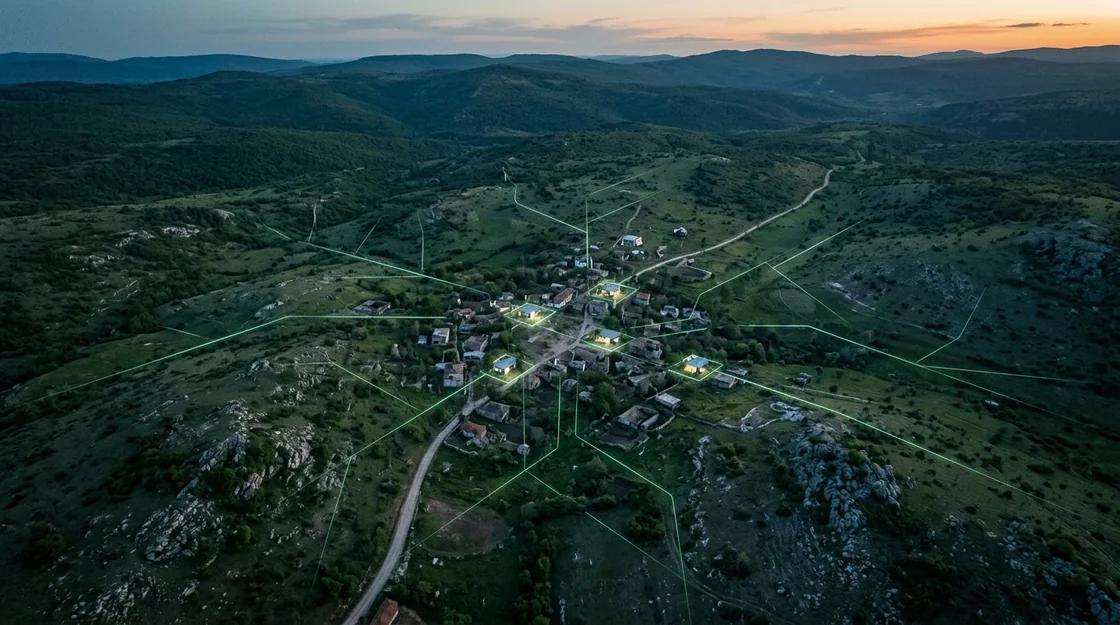
Ensuring equitable access to these advanced technologies presents another formidable hurdle. The digital divide isn’t just about internet access anymore; it’s about access to high-quality devices, reliable bandwidth, and the digital literacy skills needed to thrive in these environments. Consider rural communities, where high-speed internet remains a luxury, or lower-income families struggling to afford the latest gadgets. The question becomes: how do we prevent digital education from becoming another privilege, deepening the chasm between the haves and have-nots? Efforts toward smart infrastructure could offer some solutions, but the path is long. Without proactive measures and thoughtful policy, the promise of digital education could, surprisingly, exacerbate educational disparities rather than bridge them.
Navigating the Future of Learning
As digital education continues to evolve, its trajectory is not merely about adopting new technologies; it’s about fundamentally rethinking the purpose and delivery of learning itself. The trends we’ve explored—from AI-driven personalization to immersive VR experiences and the rise of micro-credentials—point towards an educational ecosystem that is more flexible, accessible, and responsive than ever before. the true measure of our success will lie not just in technological advancement, but in our ability to ensure equitable access, foster critical thinking, and cultivate the uniquely human elements of empathy and collaboration. How will we balance the efficiency of algorithms with the irreplaceable value of human connection in the classroom of tomorrow?
Frequently Asked Questions About Digital Education
How is AI changing the classroom experience?
AI is transforming the classroom by enabling deeply personalized learning experiences. Adaptive platforms use algorithms to tailor content and exercises to individual student needs, while intelligent tutoring systems provide real-time feedback and support, mimicking a personal mentor. This leads to increased engagement and faster proficiency in subjects.
What are micro-credentials and why are they important?
Micro-credentials are short, focused programs designed to teach specific, in-demand skills, such as data analytics or cybersecurity. They are important because they offer agile pathways for individuals to quickly acquire relevant expertise, meeting the rapid skill demands of a dynamic job market and often leading to immediate career advancement.
How can digital education address global inequalities?
Digital education can address global inequalities by breaking down geographical barriers and offering accessible learning opportunities to remote or underserved communities. Initiatives like offline learning modules and community tech centers help bridge the digital divide, ensuring that culturally relevant content and support systems reach diverse learning environments, though challenges in connectivity and device ownership persist.
What role do VR and AR play in future learning?
Virtual Reality (VR) and Augmented Reality (AR) are creating immersive learning environments that go beyond passive lectures. VR transports students to virtual field trips or allows for interactive dissections, while AR overlays digital information onto the real world, making abstract concepts tangible. Both technologies significantly enhance comprehension and engagement, particularly in STEM fields.
What are the biggest ethical concerns in digital education?
Major ethical concerns in digital education include data privacy, as AI systems collect vast amounts of student information, and algorithmic bias, where AI might unintentionally reinforce existing inequalities. Ensuring equitable access to technology and preventing bias in AI tools are critical for widespread and fair adoption of these educational advancements.