Anúncios
The dream of a driverless future has arrived, but not in the way science fiction promised. Instead of a fluid national network, we have pockets of innovation—robotaxis navigating the meticulously mapped streets of Phoenix and San Francisco while the rest of the world watches with a mix of awe and deep-seated skepticism. This isn’t a simple technological rollout; it’s a complex social experiment unfolding in real-time, revealing that the gap between a car that can drive itself and a society that will trust it is wider than ever.
While public attention remains fixated on passenger cars, a quieter but far more disruptive revolution is already underway. The core principles of autonomous transportation are reshaping global logistics, from automated cargo ships optimizing fuel on transoceanic voyages to drones delivering critical medical supplies to remote villages. These applications, operating in more controlled environments, are proving the technology’s value and scalability far from the chaotic unpredictability of city traffic.
Anúncios
This article charts the true landscape of this mobility shift. We’ll move beyond the familiar debate over self-driving cars to explore the innovations in shipping and aviation that are already transforming commerce. we will navigate the labyrinth of regulatory frameworks and ethical dilemmas that pose the greatest threat to progress. Finally, we’ll analyze the profound economic and social ripple effects, from the future of millions of driving jobs to the very design of our cities, to understand what’s at stake.
The Current Landscape of Autonomous Vehicles: A Snapshot
The driverless future isn’t some distant sci-fi dream; it’s already here, stuck in traffic in Phoenix and San Francisco. Companies like Waymo and Cruise are running commercial robotaxi services, but what most people miss is how geographically contained these operations are. This isn’t a national takeover. It’s a series of isolated, high-stakes experiments in autonomous transportation, proving that letting a computer drive is more complex than just programming it to follow the lines on a road.
Anúncios
Public opinion remains a major speed bump on the road to mass adoption. A recent study from the American Automobile Association (AAA) found that a staggering 66% of drivers are still afraid to ride in a self-driving car. That number hasn’t improved much over the past few years. Are we really ready to hand over the keys when two-thirds of the population is terrified of the technology?
Think of the current state of autonomous transportation like a teenager with a learner’s permit — it can handle familiar routes in good weather but still panics in unexpected situations. The vast majority of vehicles with “autopilot” features are merely Level 2, requiring constant human supervision. This is a far cry from the driverless Level 4 and 5 vehicles operating in those limited city zones, a distinction that fuels both hype and confusion.
This slow, methodical rollout mirrors the challenges seen in deploying other complex systems, from next-generation smart energy grids to the intricate programming behind autonomous AI agents. The real question isn’t whether the technology will work, but how long it will take for society to trust it.
Beyond Self-Driving Cars: Emerging Modes of Autonomous Transit
The public imagination is fixated on self-driving cars, but the real upheaval in autonomous transportation is happening elsewhere. While Teslas navigate suburban streets, the technology is quietly overhauling logistics, shipping, and public transit on a massive scale. This isn’t just about personal convenience. It’s a underlying restructuring of how goods and people move across the globe.
The underrated factor here is that controlled environments—like shipping lanes and pre-defined delivery routes—are far easier to automate than chaotic city traffic. Passenger cars are simply the most visible, not the most viable, starting point. The true economic and social shifts are taking place in the sky and on the sea.
Autonomous Drones: Logistics and Last-Mile Delivery
Forget the novelty of a burrito arriving by drone. The serious application is in transforming last-mile logistics and medical supply chains. Companies like Zipline are already running extensive operations, with one pilot program in Ghana completing over 16,000 flights to deliver medical supplies to remote clinics, according to a report by the World Health Organization. This cuts delivery times from hours or days to mere minutes.
This is a logistics turning point. By creating automated, point-to-point delivery networks, drones sidestep traffic, infrastructure gaps, and human-unfriendly terrain. Integrating these systems requires immense computational power, echoing the challenges seen in developing next-generation smart energy grids. The question isn’t whether it works; it’s how quickly we can scale it without turning our skies into a chaotic mess of competing commercial drones.
Revolutionizing Maritime and Air Travel
While drones handle the small stuff, automation is also taking on the titans of transport: cargo ships and commercial aircraft. Self-navigating ships are no longer theoretical. Shipping giant Maersk has been testing AI-powered navigation systems that have demonstrated a potential 7.3% fuel efficiency increase on trans-Pacific routes. These systems use predictive analytics to optimize routes based on weather, currents, and port traffic—a complex task that goes far beyond simple autopilot.
This is less like a self-driving car and more like a smart, self-correcting commuter train on an ocean-sized track. The same principles are being applied to aviation, with automated systems poised to manage everything from gate-to-gate taxiing to flight path optimization. What most people miss is that many elements of the robotic revolution are already present in modern cockpits. The final step is linking these isolated systems into a fully autonomous network, a prospect that raises as many security questions as it does efficiency gains.
We are outsourcing moral split-second decisions to lines of code, and society has not agreed on what the ‘correct’ decision even is.
— Dr. Anya Sharma, AI Ethicist at the MIT Media Lab
| Regulatory Approach | Pros | Cons |
|---|---|---|
| Permissive (e.g., U.S. State-Led) | Allows for rapid innovation and real-world testing; attracts venture capital. | Creates legal confusion across borders; inconsistent safety standards. |
| Prescriptive (e.g., E.U. Unified) | Ensures high, uniform safety benchmarks; can build public trust more effectively. | Slower deployment timeline; may stifle smaller innovators unable to meet high compliance costs. |
Navigating the Regulatory and Ethical Labyrinth
The technology for autonomous transportation is accelerating at a breakneck pace, but the laws and ethics meant to govern it are stuck in the slow lane. This isn’t just a minor inconvenience; it’s a basic roadblock. The gap between what a self-driving car can do and what it should do is a chasm filled with legal ambiguity and moral quandaries that no amount of code can solve on its own.
Global Regulatory Patchwork: A Challenge for Harmonization
Trying to create a universally accepted set of autonomous vehicle regulations is like trying to build a single device that works with every electrical outlet in the world. It’s a logistical nightmare. Different jurisdictions are creating a dizzying array of rules, leading to a fragmented system that hinders progress for manufacturers aiming for a global market. This isn’t just inefficient; it’s potentially dangerous.
Varying Standards Across Continents
In the United States, a state-by-state approach has created a complex legal map where a vehicle’s approved features can change by crossing a state line. Conversely, the European Union is attempting a more unified framework, prioritizing standardization and safety before widespread deployment. The data suggests—though not conclusively—that neither approach is a silver bullet. Each has significant trade-offs.
Here’s a breakdown of the two dominant philosophies:
| Regulatory Approach | Pros | Cons |
|---|---|---|
| Permissive (e.g., U.S. State-Led) | Allows for rapid innovation and real-world testing; attracts venture capital. | Creates legal confusion across borders; inconsistent safety standards. |
| Prescriptive (e.g., E.U. Unified) | Ensures high, uniform safety benchmarks; can build public trust more effectively. | Slower deployment timeline; may stifle smaller innovators unable to meet high compliance costs. |
Ethical Dilemmas: AI Decision-Making and Accountability
Let’s be blunt: we are programming machines to make life-or-death choices. The uncomfortable truth is that an autonomous vehicle will eventually face a no-win crash scenario. This is where the rise of autonomous AI agents moves from a technical discussion to a deeply philosophical one. Who is responsible when the algorithm makes a fatal choice?
The ‘Trolley Problem’ in Autonomous Systems
The classic “trolley problem” is no longer just a thought experiment for philosophy students; it’s a coding challenge for software engineers. Should the car swerve to hit one person to save five? What if the one person is a child and the five are adults? Dr. Anya Sharma, an AI ethicist at the MIT Media Lab, explains, “We are outsourcing moral split-second decisions to lines of code, and society has not agreed on what the ‘correct’ decision even is.” These are not bugs to be fixed but features that must be deliberately and transparently designed—a task for which there is no consensus.
This is where the fantasy of a perfect, accident-free future crashes into reality.
Building Public Trust and Acceptance
Ultimately, the success of autonomous transportation will not be determined by its technical perfection but by public acceptance. The most advanced vehicle is useless if no one is willing to ride in it. A recent study from the AAA Foundation for Traffic Safety found that a staggering 66% of drivers report being afraid of self-driving technology. That is a massive trust deficit.
To overcome this, transparency is non-negotiable. People need to understand how these systems make decisions and, crucially, how their data is being used and protected. Concerns over hacking and data breaches are legitimate, highlighting the need for reliable protocols similar to those discussed in modern trends in cybersecurity and privacy. Without public confidence, the entire enterprise remains an expensive experiment, confined to test tracks and limited pilot programs.
The Economic and Social Ripple Effect: Jobs, Infrastructure, and Urban Planning
The conversation around autonomous transportation often fixates on technology and safety, but the real earthquake is economic. Widespread adoption of self-driving vehicles won’t just change how we commute; it will fundamentally restructure entire sectors of the economy and redefine the very concept of labor for millions. The shift promises efficiency, but it also guarantees a period of jarring, uncomfortable disruption.
Transforming the Workforce: New Skills, New Roles
Let’s be blunt: millions of jobs centered around driving are on the chopping block. A recent report from the Institute for Transportation Studies estimates that up to 4.2 million driving-related jobs in the U.S. alone face a high risk of automation. This includes not just taxi drivers and truckers but also delivery personnel and bus operators. The transition will be brutal.
But the story isn’t purely one of loss. What most people miss is the corresponding creation of entirely new job categories. We will need remote fleet managers, autonomous system maintenance technicians, urban mobility planners, and cybersecurity experts specializing in vehicle networks. The challenge isn’t a net loss of jobs, but a massive skills gap. Is our current education system prepared to retrain a truck driver from Ohio to become a remote vehicle operator overseeing a fleet in three states? I suspect not. This mirrors the broader societal shifts seen in the ongoing robotic revolution, where displacement and creation happen in tandem.
Smart Cities: Adapting Infrastructure for Autonomy
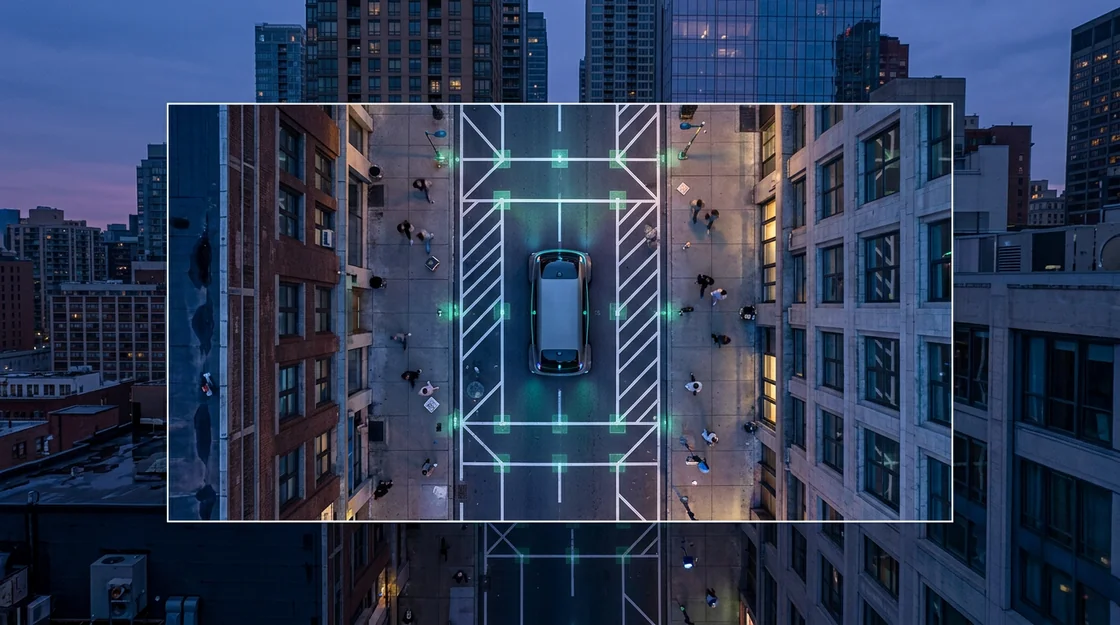
Our cities were built for human drivers—flawed, distractible, and unpredictable. Integrating fleets of autonomous vehicles requires a radical infrastructure rethink. It’s not just about repainting lines on the road; it’s about creating a digital nervous system for our urban environments. This means widespread deployment of 5G or even next-generation networks for vehicle-to-everything (V2X) communication, allowing cars to talk to each other, to traffic signals, and to central control hubs.
This level of connectivity demands a massive upgrade to our power systems, creating a direct link to the development of smarter, more resilient energy grids. Cities will likely reclaim vast amounts of space currently dedicated to parking—some estimates suggest up to 30% of urban land in some areas—opening possibilities for green spaces, housing, or new commercial zones. The underrated factor here is the cost. Who foots the bill for this multi-trillion-dollar upgrade—taxpayers or the private companies profiting from the technology? This question remains the central, unresolved tension in planning the cities of tomorrow.
Key Innovations Driving the Future of Autonomous Mobility
The transition from human-driven cars to fully autonomous transportation isn’t a single breakthrough; it’s a convergence of several distinct technologies maturing at once. While headlines often focus on the vehicles themselves, the real progress is happening within the software and hardware that form their digital nervous system. These systems are being built to process reality faster and more reliably than any human ever could. The stakes are enormous.
Advanced AI and Machine Learning Algorithms
At the heart of every autonomous vehicle (AV) is an artificial intelligence brain, but it’s far from the generalized AI seen in science fiction. This is specialized machine learning, trained on billions of miles of real and simulated driving data to recognize patterns, from a pedestrian stepping off a curb to the subtle change in traffic flow. What most people miss is that this isn’t about programming rules; it’s about the AI learning to make complex decisions once reserved for humans. It’s a statistical game of probability, not a simple if-then command structure.
Predictive Analytics for Safer Navigation
The next frontier isn’t just reacting to the present but predicting the immediate future. Predictive analytics allows an AV’s AI to anticipate the actions of other road users. By analyzing micro-behaviors—the slight swerve of a cyclist, the hesitation of a car at an intersection—the system can forecast potential dangers seconds before they materialize. Is it foolproof? not. According to data from Carnegie Mellon University, even the best systems have a 7% error margin in predicting the intent of other drivers in complex urban environments, a gap developers are working tirelessly to close.
Sensor Fusion: Lidar, Radar, and Cameras
An AV perceives the world through a suite of sensors, and no single sensor is sufficient on its own. The real magic happens in sensor fusion, where data from Lidar (light detection and ranging), radar, and high-definition cameras are layered together. Think of it like trying to identify an object in a dark room; your hands (radar), your ears (cameras), and a laser pointer (Lidar) each provide different information that, when combined, create a complete picture. This redundancy is the bedrock of AV safety.
Overcoming Environmental Challenges
The biggest test for these sensors is not a clear, sunny day but adverse weather. Heavy rain can distort camera vision, snow can block Lidar signals, and dense fog can challenge even advanced radar systems. The underrated factor here is the software’s ability to interpret incomplete or “dirty” data from these sensors. Engineers are developing algorithms that can infer the presence of a lane marking even when it’s covered in snow, based on surrounding context and historical map data—a problem even the most advanced systems still struggle with. This technology is at the very core of the robotic revolution happening on our roads.
The Role of 5G and Edge Computing
Individual vehicle intelligence is only part of the equation. For a autonomous ecosystem, vehicles need to communicate with each other (V2V), with infrastructure (V2I), and with the cloud. This requires a massive, high-bandwidth, low-latency network. This is where 5G connectivity and edge computing become non-negotiable. They provide the pipeline for the torrent of data AVs generate and consume.
This reliance on constant data flow also opens up new cybersecurity vulnerabilities that manufacturers and regulators are scrambling to address.
Real-time Data Processing and Communication
A self-driving car generates nearly 4 terabytes of data for every hour of operation, a figure reported by Intel. Sending all of this to a centralized cloud for processing is impossible; the delay would be catastrophic. Edge computing solves this by processing the most critical data directly on the vehicle or at nearby network nodes. This allows for near-instantaneous decisions, like emergency braking. The communication between the vehicle and the network must be fluid, with latency measured in milliseconds, because in autonomous transportation, lag literally kills.
The Road Ahead: Projections and Potential Breakthroughs
Pinning down a precise timeline for the widespread adoption of autonomous transportation is a fool’s errand. the data suggests—though not conclusively—a rapid acceleration in specific sectors. Analysts at Morgan Stanley project that by the end of this decade, 28% of miles traveled in dense urban centers could be in Level 4 or 5 autonomous vehicles. This isn’t about personal cars in every driveway just yet. It’s about fleets, logistics, and public transit first.
The real shift is happening under the hood. Beyond just better sensors, the next generation of mobility hinges on predictive AI and vehicle-to-everything (V2X) communication. I suspect the biggest breakthrough won’t be a single piece of hardware but the emergence of fully autonomous AI agents capable of collective learning. Imagine one vehicle hits a pothole and instantly informs every other car on the network to adjust its path. That’s the goal.
This evolution mirrors the slow, then sudden, shift in other automated fields, much like the advancements in industrial robotics took decades to mature before becoming standard.
Ultimately, the conversation is expanding beyond the vehicles themselves. True autonomy requires a connected environment, tying into broader infrastructure like smart energy grids and responsive city planning. The car is no longer just a car; it’s becoming a mobile data point in a much larger urban system.
The Next Frontier: Who Owns Your Movement?
As autonomous transportation becomes more integrated into our daily lives, the conversation will inevitably shift from technical capability to data sovereignty. Every autonomous vehicle is a high-powered data collection device, mapping not just roads but human behavior, traffic patterns, and commercial activity in exceptional detail. The most critical question we will face is not whether the car can avoid a collision, but who owns, analyzes, and profits from this vast new stream of mobility data.
Will this information be used to create hyper-efficient, responsive public infrastructure, or will it become a tool for private corporations to monetize our every move? The battle for the future of transportation may not be fought on the streets, but in the servers that store and process the data of a world in motion. How we choose to govern this digital layer will ultimately define whether this revolution leads to a more equitable and open society or a more controlled one.
Frequently Asked Questions
What are the different levels of autonomous driving?
Autonomous driving is categorized into six levels by the SAE (Society of Automotive Engineers), from Level 0 (no automation) to Level 5 (full automation). Level 2, common today, offers driver assistance but requires constant human supervision. Level 4 vehicles can operate fully autonomously within a limited geographic area (a geofence), while Level 5 vehicles are theoretical and would be able to drive anywhere a human can without any intervention.
How safe are autonomous vehicles compared to human-driven cars?
The primary safety argument for autonomous vehicles is their potential to eliminate human error, which is responsible for over 90% of traffic accidents. While simulations and limited deployments suggest they can be safer in many conditions, they still face challenges with unpredictable ‘edge cases’ and adverse weather. full real-world safety data is still being gathered as the technology matures.
What are the biggest barriers to widespread autonomous vehicle adoption?
The three main barriers are technological, regulatory, and social. Technologically, perfecting the AI to handle all possible driving scenarios is a massive challenge. Regulatively, a patchwork of local and national laws creates uncertainty for manufacturers. Socially, low public trust and fear of the technology, fueled by high-profile accidents, remain a significant hurdle to overcome.
Will autonomous transportation create or destroy jobs?
Autonomous transportation will cause a major shift in the labor market. It is expected to displace millions of professional driving jobs, such as truckers, delivery drivers, and taxi operators. it will also create new roles in areas like remote fleet management, autonomous systems maintenance, cybersecurity, and urban mobility planning, requiring a significant workforce transition and reskilling effort.
How will autonomous vehicles change urban environments?
Autonomous vehicles are poised to radically reshape cities. With a reduced need for personal car ownership and parking, vast amounts of urban land could be reclaimed for parks, housing, or pedestrian zones. Widespread adoption could also lead to decreased traffic congestion, more efficient public transit through on-demand shuttles, and the rise of ‘Mobility as a Service’ (MaaS) as the dominant form of urban transport.