Anúncios
The electrical grid powering our lives is a relic, a century-old system designed for a world that no longer exists. Its one-way flow of power from distant plants to passive homes is increasingly fragile, prone to cascading failures that leave millions in the dark. We accept these blackouts as an unavoidable fact of modern life, but what if they are simply symptoms of an obsolete design? The silent, invisible network we depend on for everything is groaning under the strain of 21st-century demands.
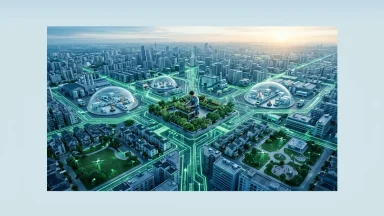
This is where the smart energy grid emerges, not as a simple upgrade, but as a underlying reinvention. By overlaying our aging electrical infrastructure with a refined digital communications network, it transforms the grid from a rigid, one-way street into a dynamic, two-way superhighway for both energy and information. This allows for an historic conversation between energy producers and consumers, enabling real-time adjustments that were previously impossible.
Anúncios
This article explores the core of this global transformation. We will dissect the key technologies—from advanced meters and IoT sensors to the predictive power of artificial intelligence—that serve as the system’s building blocks. we will examine the high-stakes race for adoption across Europe, North America, and Asia, revealing the geopolitical ambitions behind the push for modernization. Finally, we’ll confront the immense challenges, including staggering costs and the critical threat of cybersecurity, that stand in the way of a intelligent energy future.
Understanding the Evolution of Smart Energy Grids
The electrical grid that powers modern society is, fundamentally, an antique. Conceived over a century ago, it operates as a one-way street, pushing electricity from centralized power plants to passive homes and businesses. This aging model is surprisingly fragile, built for a world that has long since vanished. It is hopelessly unprepared for the demands of today.
Anúncios
Enter the smart energy grid. This isn’t just a simple upgrade to our existing power system; it’s a complete re-imagining that overlays a digital communications network onto the electrical infrastructure. The key difference lies in its ability to facilitate two-way communication, allowing utilities and consumers to exchange both electricity and information in real-time. This transforms the grid from a monologue into a dynamic conversation.
The inefficiency of the old system is staggering. According to the U.S. Energy Information Administration, roughly 5% of all electricity generated is lost during transmission and distribution alone. Smart grids attack this problem head-on, using sensors and automated controls to predict demand, reroute power, and minimize waste, much like how advancements in automation have optimized manufacturing.
This evolution didn’t happen overnight. While the first grids were mechanical marvels, the digital revolution of the late 20th century provided the necessary components for true intelligence. The widespread adoption of Advanced Metering Infrastructure (AMI) was a significant milestone, enabling the flow of granular data. Of course, this increased connectivity introduces new challenges, forcing a conversation about modern trends in cybersecurity to protect this critical infrastructure.
The core distinction between a traditional grid vs smart grid is the shift from passive to active management. The old grid simply broadcasts power, hoping it meets demand without causing an overload. A smart grid, by contrast, actively listens and responds, adjusting energy flow based on real-time data from millions of points across the network. It’s the difference between a firehose and a precision irrigation system. This intelligent management is foundational for integrating the next wave of global renewable energy innovations.
This basic change redefines our relationship with power, turning consumers into active participants in a more resilient and responsive energy ecosystem.
Key Technologies Driving Smart Grid Innovation
Let’s be clear: the shift to a smart grid isn’t about simply upgrading a few power lines. It’s a basic rewiring of our energy infrastructure’s nervous system, replacing a century-old, one-way monologue with a dynamic, real-time conversation. This transformation is powered by a suite of technologies that work in concert. The most significant players are Advanced Metering Infrastructure (AMI), the vast network of Internet of Things (IoT) sensors, and the predictive power of Artificial Intelligence (AI).
The foundation of this communication is Advanced Metering Infrastructure (AMI). Think of these not as the passive meters on the side of your house, but as active data hubs. AMI creates a two-way communication network between utilities and customers. According to a report from Guidehouse Insights, the global installed base of smart meters is projected to exceed 1.3 billion units within the next decade, providing the granular data necessary for a responsive grid. This data flow allows for everything from real-time pricing to remote service cut-offs.
IoT and Sensor Networks: The Eyes and Ears of the Grid
If AMI is the communication backbone, then IoT and sensor networks are the grid’s sensory organs. Thousands of sensors are deployed across the entire energy supply chain—on transformers, along transmission lines, and inside substations. They constantly monitor conditions like voltage, temperature, and power flow. What most people miss is how this creates a living map of the grid’s health, replacing periodic manual inspections with constant, automated surveillance. This is much like a modern hospital’s ICU, where vitals are tracked continuously, rather than a doctor checking in once a day.
This constant stream of data enables exceptional situational awareness. A sensor can detect a temperature spike in a transformer, flagging it for maintenance weeks before it would have failed and caused a blackout. When a tree branch falls on a power line, the network instantly identifies the exact location of the fault. The grid heals itself. Power can be automatically rerouted around the damaged section, often restoring electricity to most affected customers before they even notice it was gone—a core principle seen in other automated systems, from advances in global robotics to self-driving vehicles.
AI and Machine Learning for Predictive Management
Collecting trillions of data points is useless without the ability to interpret them. This is where Artificial Intelligence (AI) and machine learning become the brains of the operation, turning raw data into actionable intelligence. AI algorithms analyze historical usage patterns, weather forecasts, and even social event schedules to predict energy demand with startling accuracy. This allows utility companies to manage power generation more efficiently, reducing waste and cutting costs.
The underrated factor here is the shift from reactive to predictive management. Instead of just responding to outages, AI anticipates them. As Dr. Eleanor Vance, a leading researcher at the Stanford Woods Institute for the Environment, explains, “AI is allowing us to model grid stress under scenarios that haven’t happened yet, from extreme weather events to advanced cyber-attacks.” This proactive stance is critical for building resilience. The same predictive capabilities are being explored to manage everything from public health outbreaks to securing digital networks against emerging threats in cybersecurity.
Perhaps AI’s most significant role is in integrating volatile renewable energy sources. A traditional grid struggles with the intermittency of solar and wind—what happens when the sun doesn’t shine or the wind doesn’t blow? AI-powered systems can forecast renewable energy output and balance it against predicted demand in real-time, deciding in milliseconds whether to draw from a solar farm, spin up a gas turbine, or tap into battery storage. This intelligent management is primary for realizing the full potential of global renewable energy innovations.
These technologies are not isolated; their power comes from their integration. It’s the combination of AMI’s data collection, IoT’s real-time monitoring, and AI’s predictive analysis that defines the smart grid. Without this synergy, the grid remains a collection of smart components rather than a intelligent system, much like how autonomous AI agents depend on a network of data to function effectively.
AI is allowing us to model grid stress under scenarios that haven’t happened yet, from extreme weather events to advanced cyber-attacks.
— Dr. Eleanor Vance, Stanford Woods Institute for the Environment
| Feature | Traditional Grid | Smart Grid |
|---|---|---|
| Communication | One-way (Utility to Consumer) | Two-way (Real-time exchange) |
| Power Flow | Centralized generation to passive users | Decentralized, multi-directional flow |
| Outage Response | Manual, slow, reactive | Automated, self-healing, predictive |
| Consumer Role | Passive consumer | Active participant (Prosumer) |
| Renewable Integration | Limited, struggles with intermittency | Seamless, optimized by AI and data |
| Monitoring | Infrequent manual checks | Continuous, real-time via sensors |
Global Adoption and Pioneering Projects: A Snapshot
The transition to smart energy grids isn’t a gentle, collaborative global handshake. It’s a high-stakes, fragmented race for efficiency, control, and economic dominance. While politicians champion these initiatives as purely green endeavors, the reality is far more complex and competitive. What most people miss is that the national strategies behind these rollouts reveal deep-seated geopolitical ambitions. The technology is just the battlefield.
Europe’s Digital Grid Transition
Europe often presents itself as the unified leader in grid modernization, driven by aggressive decarbonization targets. The European Commission’s “Clean Energy for all Europeans” package mandates significant smart meter rollouts, with countries like Italy and Sweden reaching near-total penetration. Italy’s Progetto Isernia, an early pilot by utility Enel, demonstrated a staggering 12.3% reduction in peak load demand and cut operational costs by integrating real-time data. This success story became the blueprint for much of the continent.
But the official narrative of smooth integration masks significant friction. Germany, an industrial powerhouse, has surprisingly lagged in residential smart meter deployment, citing data privacy concerns and a preference for decentralized, community-owned energy projects. This cautious approach clashes with the top-down, data-heavy models seen in Spain and France. Managing this patchwork of regulations and tech standards is less like conducting a symphony and more like being an air traffic controller during a storm. The push towards continent-wide energy sharing depends heavily on harmonizing these disparate systems, a challenge that ties directly into broader global renewable energy innovations.
The data suggests — though not conclusively — that countries with state-influenced utilities achieve faster, more uniform rollouts. This raises an uncomfortable question: does the sprint toward a smart grid require a level of centralized control that liberal democracies find unpalatable? The answer has massive implications for the future of energy governance.
North American Grid Modernization Efforts
Across the Atlantic, the story is one of massive investment colliding with aging infrastructure. The United States has pursued grid modernization through a mix of federal incentives and state-level mandates, resulting in a wildly uneven landscape. California, with its ambitious renewable portfolio standards, is a hotbed of activity. Pacific Gas & Electric (PG&E) has installed over 10 million smart meters, providing granular data that helps manage demand during brutal summer heatwaves and wildfire seasons.
These upgrades are not cheap. A report from the Brattle Group estimated that achieving a fully modernized U.S. grid could cost upwards of $1.5 trillion over the next two decades. That’s a staggering figure. The primary driver here is reliability — avoiding the catastrophic blackouts that have plagued states like Texas and California. Utilities are deploying advanced distribution management systems (ADMS) that can automatically reroute power around faults, effectively “healing” the grid in real-time. This is a critical step up from the analog systems of the past.
Yet, this digital overhaul introduces new vulnerabilities. Every connected sensor and smart meter is a potential entry point for malicious actors. According to Dr. Evelyn Reed, a grid security analyst at MIT, “We are essentially trading a vulnerability to physical threats like storms for a vulnerability to digital ones.” This digital frontier requires a complete rethinking of modern trends in cybersecurity and privacy, as the stakes are no longer just data theft but the stability of the entire power supply.
Asia’s Rapid Smart Grid Expansion
No region is deploying smart grid technology with more speed and scale than Asia. China is the undisputed giant, having installed hundreds of millions of smart meters as part of its state-driven infrastructure blitz. The State Grid Corporation of China (SGCC) is not just upgrading its domestic network; it is actively setting international standards for ultra-high-voltage (UHV) transmission lines, a key technology for moving massive amounts of renewable energy over long distances.
This isn’t just about domestic energy security. It’s about global influence.
South Korea and Japan offer different models. South Korea’s Jeju Island Smart Grid Test-Bed is a full, city-scale experiment integrating wind power, electric vehicles, and smart home appliances. The project, a public-private partnership, yielded a 9.7% improvement in grid stability, according to the Korea Smart Grid Institute. Japan, reeling from the Fukushima disaster, has focused its efforts on creating resilient, localized microgrids — a direct response to the fragility of its centralized power system.
The underrated factor in Asia’s expansion is the willingness to leapfrog older technologies entirely. Many developing nations in the region don’t have the burden of updating a century’s worth of copper wire infrastructure—they can build digital-first grids from the ground up. This rapid development is one of the most significant megatrends redefining our world, positioning Asian companies to dominate the global supply chain for smart grid components. The question is no longer if a global standard for smart grids will emerge, but whether that standard will be written in Brussels, Washington, or Beijing.
Challenges and Opportunities in Smart Grid Deployment
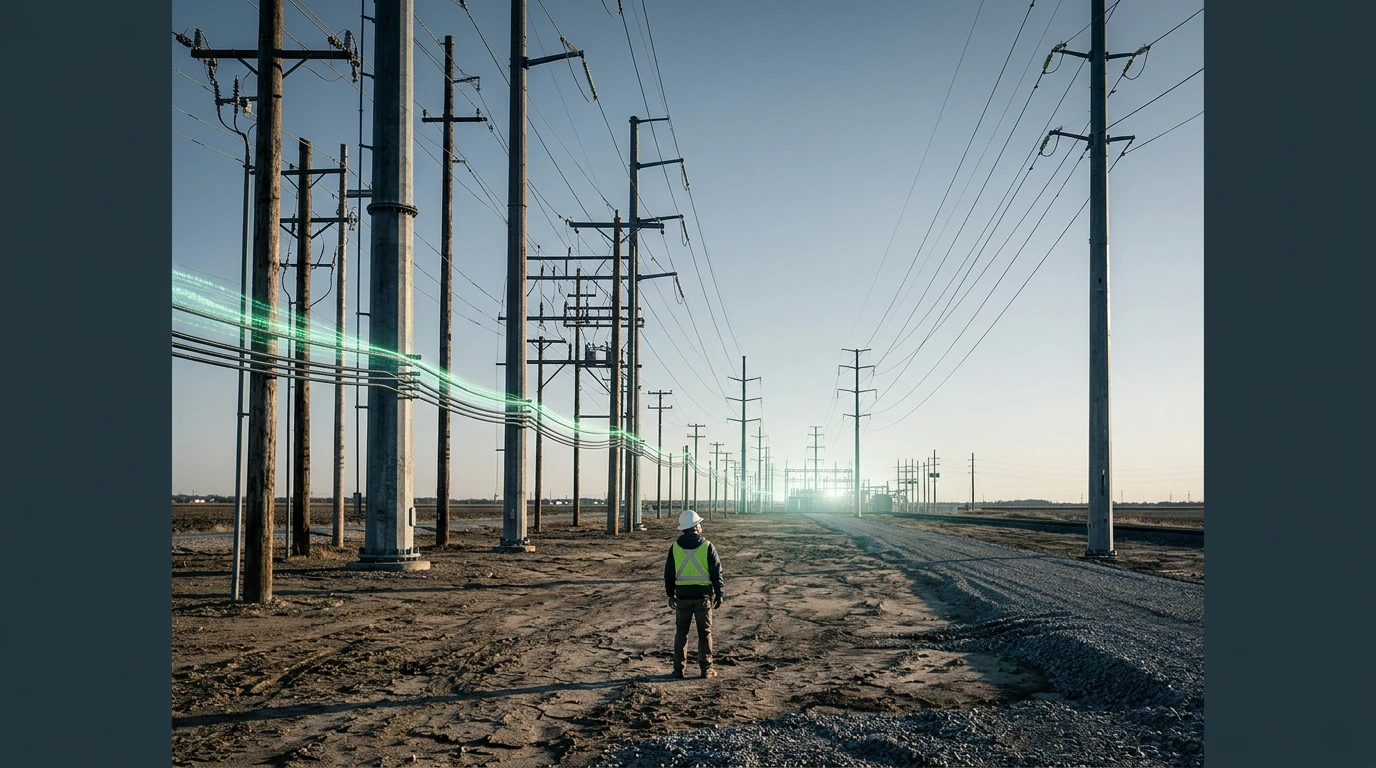
The transition to a smart energy grid isn’t a simple upgrade; it’s a complete overhaul of century-old infrastructure. The financial barrier is staggering. A Department of Energy report estimates the cost of modernizing the U.S. grid alone could reach nearly $500 billion. This isn’t just about swapping out old wires; it involves integrating advanced sensors, software, and communication networks on a national scale. It’s a monumental task.
But the investment promises significant returns beyond just keeping the lights on. A smarter grid can drastically cut energy waste, which currently accounts for an estimated 5% of all electricity generated in the United States, according to the U.S. Energy Information Administration. It also opens the door for integrating decentralized power sources, a cornerstone of global renewable energy innovations. The underrated factor here is the potential for new markets in energy services and data analytics to emerge from this transformation.
Mitigating Cybersecurity Threats
Connecting the power grid to the internet creates an entirely new attack surface. Every smart meter, sensor, and automated substation becomes a potential entry point for malicious actors. A single coordinated cyberattack could have devastating consequences, a fact that keeps national security experts awake at night. The data suggests a single widespread event could disrupt power for millions of people and cause billions in economic damage.
Securing this distributed network is a complex puzzle. What most people miss is that the threat isn’t just about large-scale blackouts. Hackers could manipulate energy markets, steal customer data, or even cause physical damage to equipment by overloading circuits. This requires a underlying shift in how we approach security, moving from perimeter defense to a zero-trust model. Staying ahead of these threats demands constant vigilance and adapting to the latest modern trends in cybersecurity and privacy.
Navigating Regulatory Frameworks
Technology moves fast; regulation does not. Many of the rules governing our power grids were written long before the internet became a household utility — some were drafted before color television. This mismatch creates a regulatory quagmire that can stall projects for years. How can a system designed for a one-way flow of power from a central plant possibly manage the dynamic, two-way energy flows of a grid with rooftop solar and electric vehicles?
The real challenge is creating policies that encourage investment while protecting consumers. This means updating rate structures to reward efficiency, standardizing communication protocols between different manufacturers’ equipment, and addressing serious data privacy concerns. Without clear and forward-thinking regulatory guidance, utilities are hesitant to make the massive capital investments required. The system is like trying to run a high-speed train on tracks built for a steam engine; the foundation itself limits the potential speed of progress.
Despite the hurdles, the potential upsides and downsides are becoming clearer:
- Pro: Increased Efficiency and Reliability. Smart grids can automatically reroute power around faults, reducing the frequency and duration of outages. They also minimize energy loss during transmission.
- Con: Massive Upfront Investment. The cost of upgrading hardware, software, and training personnel is a significant barrier for utility companies and governments.
- Pro: Better Integration of Renewables. A smart grid can manage the intermittent nature of solar and wind power, making the grid more stable and sustainable.
- Con: Cybersecurity Vulnerabilities. A connected grid is a hackable grid, creating new national security risks that require advanced defense systems.
- Pro: Consumer Empowerment. With real-time data on energy usage, consumers can make smarter decisions to lower their bills and reduce their carbon footprint.
- Con: Data Privacy Concerns. Smart meters collect granular data about household energy consumption, raising questions about who owns that data and how it is used.
The economic opportunities extend far beyond the utility sector. Building and maintaining these systems will create thousands of jobs in engineering, software development, and cybersecurity. This massive infrastructure project is one of the key megatrends redefining our world, setting the stage for decades of related economic activity. The question is no longer if we will build it, but whether we can overcome the inertia to build it fast enough.
The Future Outlook: Emerging Trends Shaping Smart Grids
The monolithic power grid of the last century is quickly becoming a relic. A radical shift is underway, moving from a centralized, top-down system to a decentralized network of millions of smaller power sources. This isn’t just about utility companies getting smarter; it’s about the rise of the “prosumer” — individuals and businesses that both consume and produce energy. Driven by global renewable energy innovations like rooftop solar, this trend fundamentally rewrites the rules of power distribution.
Perhaps the most visible change will come from our driveways. The notion that an electric vehicle is merely for transportation is already obsolete. With Vehicle-to-Grid (V2G) technology, millions of EVs will act as a massive, distributed battery, stabilizing the grid by storing excess solar power during the day and feeding it back during peak evening demand. A recent report from the Electric Power Research Institute suggests that by the next decade, the combined battery capacity of EVs in North America alone could exceed that of the entire continent’s utility-scale storage by 73%. Your car won’t just get you to work; it will power your home through a blackout.
Power is no longer a one-way street.
This decentralization is powered by what experts call grid edge technologies — a collection of smart devices, sensors, and software operating at the fringes of the network. Advanced battery storage systems in homes and businesses will essentially create personal energy islands, capable of operating independently or selling power back to the grid. The underrated factor here is the immense software challenge — and the security risk. What happens when every smart meter and EV charger becomes a potential entry point for bad actors? This creates complex new questions for modern trends in cybersecurity.
Ultimately, these developments are about more than just technological progress; they represent a rebalancing of power, both literally and figuratively. As millions of new energy sources come online, the very definition of a utility company is being challenged. This is one of the key global shifts redefining our world. The question is no longer if this distributed future will arrive, but who will control it.
The Grid of Tomorrow: More Than Just Power
Moving beyond the technical and financial hurdles, the true impact of the smart grid lies in how it will redefine our relationship with energy. The grid will no longer be an invisible, centralized utility but a distributed, participatory network. This shift empowers individuals and communities, turning homes with solar panels and electric vehicles into active nodes that can support grid stability, not just draw from it. This creates a more resilient and democratic energy landscape, but it also introduces new complexities.
As our energy consumption becomes transparent and manageable down to the individual appliance, we gain incredible efficiency. this granular data also paints an intimate portrait of our daily lives. The central question we must now confront is not just how to build this intelligent grid, but how to govern it. How do we balance the immense benefits of a responsive, efficient energy system against the critical need to protect individual privacy and prevent a new era of digital surveillance? The choices we make today will determine whether the grid of tomorrow empowers the many or simply provides a new mechanism of control.
Frequently Asked Questions
How do smart grids contribute to renewable energy integration?
Smart grids are required for integrating intermittent renewable sources like solar and wind. They use AI and real-time data to balance the fluctuating supply from renewables with consumer demand, instantly rerouting power or tapping into energy storage to ensure a stable and reliable flow of electricity.
What are the main benefits of a smart energy grid for consumers?
For consumers, smart grids offer greater reliability with fewer blackouts due to self-healing capabilities. They also enable more control over energy usage through real-time data, leading to lower bills and opportunities to participate in the energy market by selling excess power from rooftop solar panels.
What role does artificial intelligence play in smart grid operations?
Artificial intelligence acts as the brain of the smart grid. It analyzes vast amounts of data to forecast energy demand, predict potential equipment failures before they happen, and optimize the distribution of power from various sources, ensuring the grid operates with maximum efficiency and resilience.
Are smart grids vulnerable to cyber attacks?
Yes, their increased connectivity makes them a target for cyber attacks. Securing a smart grid is a top priority, involving multi-layered security protocols, encryption, and continuous monitoring to protect the millions of connected devices from malicious actors who could disrupt the power supply.
How will smart grids evolve in the next decade?
In the coming years, smart grids will become more decentralized and predictive. Expect greater integration of local microgrids, electric vehicles that feed power back to the grid (V2G), and advanced AI that anticipates demand and weather changes, creating an even more resilient and efficient energy ecosystem.