
Anúncios
The image of a robot is often locked in the past: a hulking, repetitive arm on a factory assembly line. But that picture is now decades out of date. Today, the robotics revolution is unfolding not in caged-off industrial zones, but in our hospitals, farms, and warehouses. These are not just stronger or faster machines; they are increasingly intelligent systems capable of perception, learning, and adaptation, blurring the line between a simple tool and a collaborative partner.
This rapid evolution is fueled by a convergence of powerful technologies. Breakthroughs in artificial intelligence, coupled with cheaper and more advanced sensors and computing power, have created the foundation for this new era of automation. The result is a global shift that goes beyond mere efficiency gains. It represents a basic rethinking of how tasks are performed, how industries operate, and how humans interact with technology in virtually every aspect of modern life. The implications are vast, touching everything from economic productivity to the very nature of labor itself.
Anúncios
So, what does this new automated world actually look like? This article charts the latest global trajectories of robotics and automation. We will explore the current breakthroughs redefining entire industries, analyze the evolving dynamics between humans and machines in the workforce, and confront the critical ethical frontiers and governance challenges that arise. Finally, we’ll follow the investment and innovation driving the next generation of robotic capabilities, providing a clear map of where this transformative technology is headed next.
Redefining Industries: Current Breakthroughs in Robotics
The field of robotics and automation is no longer confined to the predictable assembly lines of car manufacturing. We’re seeing a basic shift driven by artificial intelligence and machine learning, creating smarter, more adaptable machines. What most people miss is that these aren’t just faster arms; they are systems that can perceive, learn, and adapt to their environment in real time. This evolution is one of the key global shifts redefining our world.
Anúncios
Think of it less like a machine following a rigid script and more like an actor improvising on stage. A recent report from the Boston Consulting Group highlights this, showing a 24% increase in robotic installations in logistics and healthcare. But what happens when these machines become true autonomous AI agents? That question is driving the next wave of development.
From surgical bots performing delicate procedures with superhuman precision to autonomous drones managing vast agricultural fields (and yes, even robots that can mix a perfect cocktail), the applications are expanding rapidly. These connected systems generate massive amounts of data, which brings up its own set of challenges—especially around cybersecurity and privacy.
The pace of change is simply astonishing.
This integration of cognitive ability into physical hardware is blurring the lines between tools and partners, raising new questions about the future of work and industry itself.
The Human-Robot Synergy: Evolving Workforce Dynamics
The fear of a robot taking your job is a modern-day ghost story, but the reality is far more complex and, surprisingly, more collaborative. Instead of a simple replacement, we’re seeing a recalibration of workplace roles where human and machine strengths are combined. This shift isn’t about a takeover; it’s about a partnership. The focus is moving from pure automation to augmentation.
What most people miss is how this partnership is reshaping the very definition of productivity. It’s less like a boss firing an employee for a machine and more like a skilled carpenter getting a new power tool. The tool doesn’t replace the carpenter’s skill but amplifies it, allowing them to build more, faster, and with greater precision. This evolution is central to understanding the global shifts redefining our world.
Cobots and Collaborative Work Environments
A major development in this area is the rise of collaborative robots, or cobots. These machines are designed specifically to work alongside humans in a shared space—these aren’t the massive, caged-off industrial arms of the past. A recent report from the International Federation of Robotics (IFR) noted that cobot installations grew by 11% even during a period of economic uncertainty, showcasing their increasing integration.
In a typical setting, a cobot might handle the physically demanding or highly repetitive tasks, like lifting heavy components or tightening the same bolt 3,000 times a day. This frees up the human worker to focus on quality control, custom configurations, and problem-solving. So, what does this collaboration actually look like? In an electronics assembly plant, a cobot arm might present a circuit board for a technician to perform a delicate soldering job, a task requiring human dexterity and judgment. This model mirrors some of the principles seen in the development of autonomous AI agents, where technology handles rote tasks to support human decision-making.
Reskilling and Upskilling for the Automated Era
The conversation about job displacement is unavoidable, and some roles are certainly becoming obsolete. The World Economic Forum’s “Future of Jobs” report projects that while automation may displace millions of jobs, it’s also expected to create new ones, particularly in fields related to data analysis, AI, and robotics maintenance. The net effect, the data suggests, points toward a challenging but ultimately positive transformation of the labor market.
This creates an urgent need for reskilling and upskilling. The jobs of tomorrow will require different competencies, moving away from manual labor and toward technical management and digital literacy. Companies and governments are beginning to invest in training programs that equip workers with skills in programming, robot supervision, and data interpretation. Protecting the data generated by these connected systems is also creating new roles at the intersection of automation and cybersecurity and privacy.
The challenge isn’t stopping automation, but rather managing the transition for the human workforce smoothly and equitably.
While automation may displace millions of jobs, it’s also expected to create new ones. The net effect, the data suggests, points toward a challenging but ultimately positive transformation of the labor market if we can manage the transition.
— Paraphrased from the World Economic Forum, “Future of Jobs” Report
| Aspect of Automation | Key Developments & Implications |
|---|---|
| Industry Breakthroughs | Robotics is moving beyond manufacturing into healthcare (surgical bots) and agriculture (precision farming), driven by AI and machine learning. |
| Workforce Dynamics | The focus is shifting from job replacement to human-robot collaboration (‘cobots’), creating an urgent need for workforce reskilling and upskilling. |
| Ethical & Governance | Major challenges include algorithmic bias in AI, establishing legal accountability for autonomous systems, and a growing regulatory divide between the EU and US. |
| Future Investment | Capital is flowing from hardware to intelligent software platforms, focusing on AI, machine learning, and soft robotics for more adaptable systems. |
Ethical Frontiers and Governance in Automation
As automated systems become more integrated into our daily lives, from the factory floor to the operating room, the conversation is shifting from “what can they do?” to “what should they do?” This pivot brings a complex web of ethical questions and a pressing need for clear governance. Establishing rules for machines that learn and adapt is one of the defining challenges of our time, forcing us to codify values into algorithms.
The stakes are incredibly high. Without thoughtful oversight, the same technologies designed to improve lives could easily perpetuate societal inequalities or create new forms of harm. It’s a delicate balancing act between fostering progress and ensuring protection.
Addressing Algorithmic Bias and Fairness
One of the most immediate ethical hurdles is algorithmic bias. An AI is only as unbiased as the data it’s trained on, and historical data is often filled with human prejudices. For instance, an automated hiring tool trained on decades of company hiring records might learn to favor male candidates, not because of malice, but because it reflects past hiring patterns. This creates a feedback loop that can entrench discrimination.
The consequences are not theoretical. Research from MIT’s Gender Shades project revealed that some commercial facial recognition systems had error rates as high as 34.7% for darker-skinned women, compared to just 0.8% for lighter-skinned men. Correcting for these biases isn’t as simple as just feeding the machine “better” data; it requires a core rethinking of how these systems are built and tested. What most people miss is that fairness itself is a concept with multiple, sometimes conflicting, mathematical definitions.
The Challenge of Accountability in Autonomous Systems
When a self-driving car is involved in an accident, who is at fault? This is no longer a hypothetical question. The issue of accountability is a legal and ethical minefield, particularly with systems that operate as “black boxes.” In many complex neural networks, even the developers don’t fully understand the precise chain of reasoning behind a specific output—a reality that complicates assigning blame when things go wrong.
This lack of transparency makes it difficult to determine whether a failure was due to a design flaw, a data error, or an unforeseeable edge case. Many of these autonomous AI agents are reshaping society’s fabric in ways that outpace our legal frameworks. It’s like trying to understand a car crash by only looking at the final wreckage, without any skid marks, witness statements, or event data recorder to piece together the story.
Global Regulatory Landscape: A Comparative Overview
Recognizing these challenges, governments worldwide are beginning to construct frameworks for AI governance and automation policy. no global consensus has emerged. Instead, a patchwork of national and regional strategies is taking shape, each reflecting different cultural and political priorities. This divergence is one of the key global shifts redefining our world.
This creates a complex environment for international companies and raises questions about which set of rules will become the de facto global standard.
EU’s AI Act vs. US Approaches
At the forefront of broad regulation is the European Union with its AI Act. This legislation takes a risk-based approach, categorizing AI applications into four tiers: unacceptable risk (which are banned), high risk (subject to strict requirements), limited risk (with transparency obligations), and minimal risk (largely unregulated). For high-risk systems, the Act mandates rigorous testing, clear documentation, and human oversight, reflecting a strong emphasis on underlying rights and modern trends in cybersecurity and privacy.
In contrast, the United States has so far adopted a more sector-specific and market-driven approach. Rather than a single overarching law, the US relies on existing agencies to regulate AI within their domains, guided by frameworks like the National Institute of Standards and Technology (NIST) AI Risk Management Framework. The data suggests—though not conclusively—that this model prioritizes flexibility and speed, fearing that heavy-handed regulation could stifle American competitiveness. This transatlantic divide sets up a key test for how open societies will ultimately govern these powerful technologies.
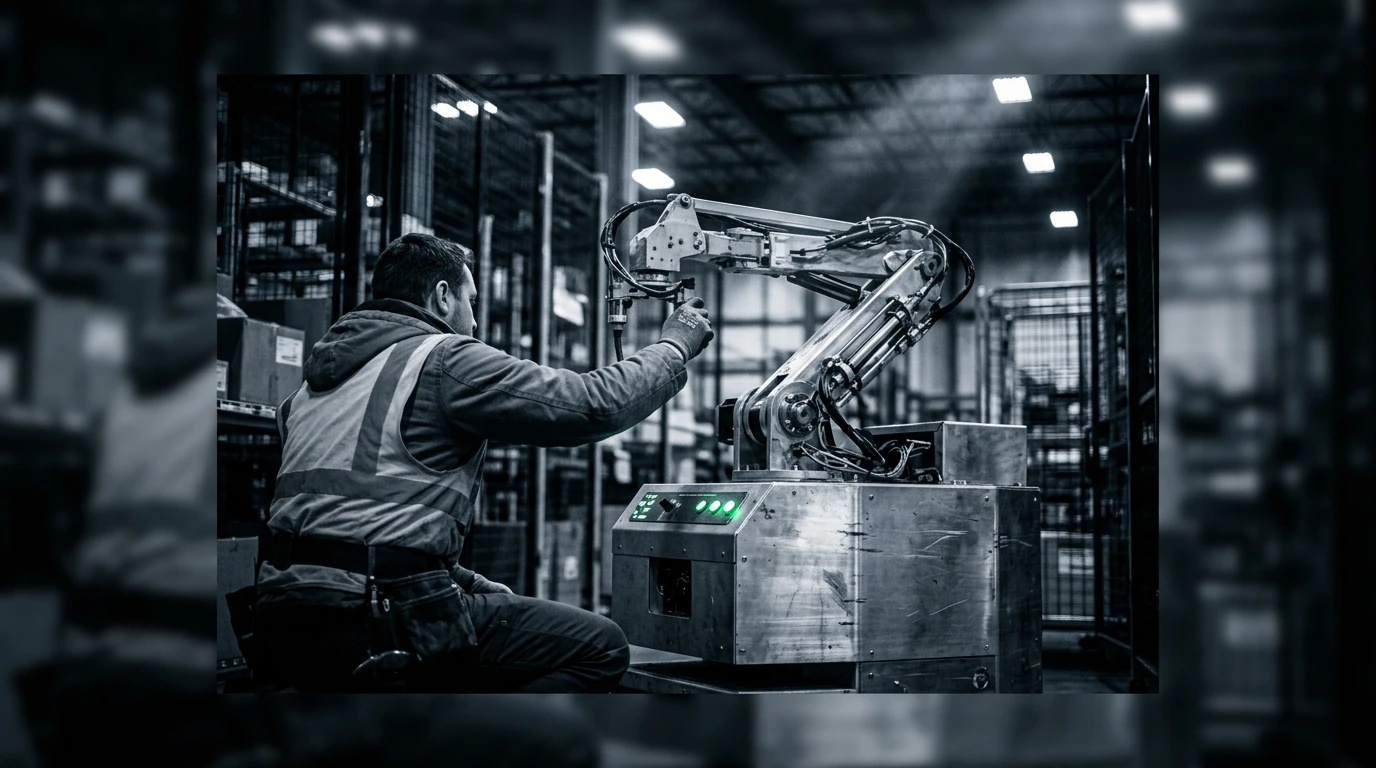
Automation Beyond the Factory: New Applications and Sectors
When people think of robotics and automation, the image of a car factory assembly line often comes to mind. That picture is quickly becoming outdated. The real story is how automation is quietly integrating into sectors far from the factory floor, fundamentally changing services we rely on daily. These shifts are a key part of the megatrends redefining our world.
Transforming Healthcare with Robotic Assistance
The medical field has become a significant area for robotic applications, extending far beyond science fiction fantasies. Surgical systems, such as the widely used da Vinci Surgical System, allow doctors to perform complex procedures with enhanced precision and smaller incisions, leading to faster patient recovery times. A report from Allied Market Research projects the global medical robotics market to reach $28.7 billion by the end of the decade. But are patients ready to trust a machine with their lives, even with a surgeon at the controls? The data suggests acceptance is growing, especially as outcomes improve.
Beyond the operating room, robots are handling tedious but vital tasks. They autonomously disinfect hospital rooms, transport lab samples, and even assist with patient mobility. This frees up human staff to focus on direct patient care and complex decision-making. Of course, this increased connectivity raises serious questions about data security, an issue central to modern trends in cybersecurity and privacy.
Smart Farming: Automation for Sustainable Agriculture
Agriculture is undergoing its own quiet revolution, driven by the need for greater efficiency and sustainability. Agricultural automation now involves GPS-guided tractors that plant seeds with centimeter-level accuracy and drones that monitor crop health using multispectral imaging. This approach is less like carpet-bombing a field with water and fertilizer and more like a chef seasoning a dish one pinch at a time. The results are undeniable.
A study by the University of Nebraska-Lincoln found that precision irrigation systems can reduce water usage by up to 15% while simultaneously increasing crop yields. What most people miss is how these technologies make farming more resilient to climate change and labor shortages. From automated milking parlors to robotic harvesters that can identify and pick ripe fruit, these systems function as autonomous agents reshaping traditional industries from the ground up.
The integration of robotics is not just about replacing human labor but augmenting it, creating new possibilities in fields long governed by manual processes. As these technologies mature, the next challenge will be ensuring equitable access and managing the societal transition they bring.
Investment and Innovation: The Future Trajectory of Robotics
The flow of capital often predicts the direction of technology, and for robotics and automation, the current is strong. Following the expansion into new sectors, investment is pouring into companies that are refining both the brains and bodies of automated systems. We are seeing a distinct pivot in funding priorities. The focus is shifting from clunky, single-purpose machines to intelligent, adaptable platforms.
Key Investment Hotspots: From Hardware to Software
Venture capital is no longer just chasing better grippers or faster assembly arms. According to a recent report from the International Federation of Robotics (IFR), global private investment in robotics reached a staggering $17.3 billion, with a significant 42% of that funding directed toward software-focused startups. This includes companies developing AI-driven operating systems, simulation software, and fleet management platforms. The hardware is becoming a commodity; the software is where the real value is being built.
This software-first approach is creating ecosystems, not just standalone products. It’s a lot like the smartphone market—the physical phone is important, but the app store is what makes it powerful. Companies specializing in machine learning and computer vision are attracting the highest valuations, as their technologies enable robots to perceive, learn, and adapt to unstructured environments. What most people miss is how this trend is creating an entirely new class of autonomous AI agents that can operate with minimal human oversight.
The Next Generation of Robotic Capabilities
Current innovation is pushing robots beyond the rigid confines of the factory floor. The next wave of technology centers on creating machines that can interact with the world in more human-like ways. We’re talking about advancements in soft robotics, which uses flexible materials to allow robots to handle delicate objects—think harvesting a raspberry without crushing it—and navigate cluttered spaces.
Another area seeing huge progress is swarm intelligence, where groups of simpler, cheaper robots coordinate to perform complex tasks. Dr. Kenji Tanaka of the MIT Media Lab explains that the focus is on “collective emergent behavior,” where the group is smarter than the sum of its parts. Could a swarm of small drones inspect a bridge for cracks more effectively than a single, expensive machine? The data suggests yes. These developments are complemented by enhanced sensory inputs, with labs developing robotic systems that can “smell” chemical leaks or “feel” textural differences with incredible precision.
Geopolitical Competition in the Robotics Sector
The push for robotic superiority has become a key element of international strategy. It’s a quiet but intense competition, with nations viewing leadership in automation as required for economic security and influence. This isn’t just about corporate competition; it’s a core part of broader global shifts redefining our world.
The Race for AI Dominance
At the heart of this rivalry is the race for artificial intelligence. Countries are implementing national strategies to foster AI and robotics development. China’s “Made in China 2025” initiative, for instance, explicitly targets leadership in robotics, pouring billions into research, subsidies, and talent acquisition. In response, the United States and the European Union have launched their own multi-billion dollar programs to accelerate AI research and maintain a competitive edge. The underrated factor here is not just funding, but access to the vast datasets needed to train next-generation AI models.
Roadmap for Sustainable Robotic Development
For all the excitement, the path forward is not without significant hurdles. Building a sustainable robotics industry requires more than just technological breakthroughs. One of the most pressing concerns is energy consumption. A recent analysis from the Brookings Institution highlighted that large-scale data centers for AI and fleets of autonomous robots could place considerable strain on power grids. This has to be addressed.
As robots become more interconnected, they also become more vulnerable. Ensuring their operational security is a massive challenge—after all, a hacked industrial robot is a serious physical threat. This means that modern trends in cybersecurity must be integrated into robotic design from the very beginning, not bolted on as an afterthought. The industry must also confront issues of electronic waste, repairability, and the ethical frameworks governing autonomous decision-making, creating a complex roadmap for developers and policymakers alike.
Navigating the Automated Future: A Strategic Checklist for Stakeholders
Moving from investment trends to practical action requires a clear plan for everyone involved. For businesses, policymakers, and individual workers, preparing for a more automated world isn’t about predicting the future with perfect accuracy. It is about building resilience and adaptability into our current structures. The key is to focus on a few core strategic areas that provide the most stability in a changing environment.
First, a massive focus on workforce education and reskilling is non-negotiable. The World Economic Forum’s Future of Jobs report suggests that nearly 44% of core skills will change for workers in the next few years. This means public-private partnerships must fund accessible training programs focused on data literacy, human-machine collaboration, and creative problem-solving. What most people miss is that these aren’t just technical skills; they are about understanding how these global shifts are redefining our world from the ground up.
Adaptation is not optional.
Second, businesses need an agile adoption strategy. Instead of a complete, disruptive overhaul, the smarter approach is often incremental integration. Think of it like trying a new spice in a familiar recipe before remodeling the entire kitchen. Companies should pilot technologies like autonomous AI agents in controlled environments, measuring their impact on productivity and employee satisfaction before a full-scale deployment.
Finally, policymakers must create a supportive framework. This involves updating labor laws to accommodate new work models and establishing clear ethical guidelines for AI and robotics. It also means strengthening the digital infrastructure (a topic surprisingly linked to modern trends in cybersecurity) to ensure equitable access. Creating a roadmap now prevents a reactive scramble later on when these technologies become fully mainstream.
Beyond Efficiency: What is the Ultimate Goal?
As we integrate these refined systems into the fabric of society, the conversation must evolve beyond metrics of productivity and profit. The trajectory of automation is not a predetermined path; it is a series of choices we are making today. Are we building a future where technology is used primarily to cut costs and displace labor, or one where it augments human capability, freeing us from dangerous and monotonous work to focus on creativity, critical thinking, and connection?
The answer will define the next century. Every new algorithm and robotic system is a reflection of our priorities. The ultimate challenge, then, isn’t just a technical one of building better robots, but a deeply human one of deciding what kind of future we want them to help us create.
Frequently Asked Questions
How are robotics and automation impacting global job markets?
Robotics and automation are causing a major shift rather than a simple net loss of jobs. While some repetitive and manual roles are being displaced, new positions are being created in areas like robot maintenance, data analysis, and AI supervision. This creates a strong demand for upskilling and reskilling the existing workforce to adapt to new, more collaborative roles alongside machines.
What are the main ethical concerns surrounding advanced robotics?
The primary ethical concerns include algorithmic bias, where AI systems perpetuate historical human prejudices present in their training data. Another major issue is accountability; determining who is responsible when an autonomous system fails is a complex legal and moral challenge. These issues require reliable governance and transparent design to ensure fairness and safety.
Which industries are seeing the most significant advancements in automation?
Beyond traditional manufacturing, healthcare and agriculture are experiencing transformative changes. In healthcare, robotic systems assist in complex surgeries and handle logistical tasks. In agriculture, automation enables precision farming with GPS-guided tractors and drones, leading to increased efficiency and sustainability.
How can governments prepare for the widespread adoption of automation?
Governments can prepare by investing heavily in education and workforce retraining programs to equip citizens with necessary digital skills. They can also establish clear regulatory frameworks, like the EU’s AI Act, to manage risks associated with new technologies, promote ethical development, and ensure public trust without stifling innovation.
What is the difference between AI and automation in practical terms?
Automation refers to technology that performs a task without human assistance, often based on a set of pre-programmed rules. AI (Artificial Intelligence) is a broader concept where systems can simulate human intelligence to learn, reason, and adapt. A simple factory robot performing one repetitive task is automation, while a robot that can visually identify different objects and decide how to pick them up is using AI.