Anúncios
Biometric Authentication in 2026: Comparing 4 Leading Security Technologies
The landscape of digital security is perpetually evolving, driven by an insatiable need for more robust, convenient, and user-friendly authentication methods. As we hurtle towards 2026, the prominence of Biometric Authentication 2026 is undeniable. Gone are the days when passwords and PINs were the sole guardians of our digital identities; today, our unique biological characteristics are stepping up to the plate, offering a level of security and convenience previously unimaginable. This article delves deep into the four leading biometric technologies poised to dominate the security sphere in 2026: facial recognition, fingerprint scanning, iris recognition, and voice biometrics. We will meticulously compare their strengths, weaknesses, and the nuanced ways they are shaping the future of secure access.
Anúncios
The Rise of Biometric Authentication: A Paradigm Shift in Security
The fundamental shift towards Biometric Authentication 2026 is rooted in its inherent advantages over traditional knowledge-based (passwords, PINs) and token-based (smart cards, OTP devices) authentication. Biometrics leverage ‘something you are’ rather than ‘something you know’ or ‘something you have.’ This makes them incredibly difficult to steal, forget, or lose, thereby significantly enhancing both security and user experience. The global market for biometric systems is projected to continue its exponential growth, fueled by advancements in AI, machine learning, and sensor technology, making 2026 a pivotal year for widespread adoption across various sectors.
Anúncios
From unlocking our smartphones to authorizing financial transactions and gaining access to secure facilities, biometrics are becoming an indispensable part of our daily lives. The convenience factor is a major driver; a quick glance, a touch, or a spoken phrase can grant access, eliminating the friction associated with remembering complex passwords or carrying physical tokens. However, this convenience comes with its own set of challenges, particularly concerning privacy, accuracy, and the potential for spoofing. Understanding these trade-offs is crucial as we examine the leading technologies.
Why Biometric Authentication 2026 Matters Now More Than Ever
The increasing sophistication of cyber threats necessitates a proactive approach to security. Traditional methods are proving inadequate against phishing attacks, brute-force attempts, and credential stuffing. Biometric authentication offers a more robust defense mechanism by introducing a unique, personal layer of security. In 2026, with the proliferation of IoT devices, smart cities, and remote work, the need for seamless, secure, and scalable authentication solutions will be paramount. Biometrics provide a promising answer to these complex demands, evolving beyond mere convenience to become a fundamental pillar of our digital infrastructure.
Furthermore, regulatory bodies worldwide are increasingly emphasizing stronger authentication protocols. Compliance requirements, such as those seen in financial services and healthcare, are pushing organizations to adopt advanced biometric solutions. This regulatory impetus, combined with technological innovation and growing consumer acceptance, solidifies the position of Biometric Authentication 2026 as a critical area of focus for businesses and individuals alike.
1. Facial Recognition: The Ubiquitous Gaze of Security
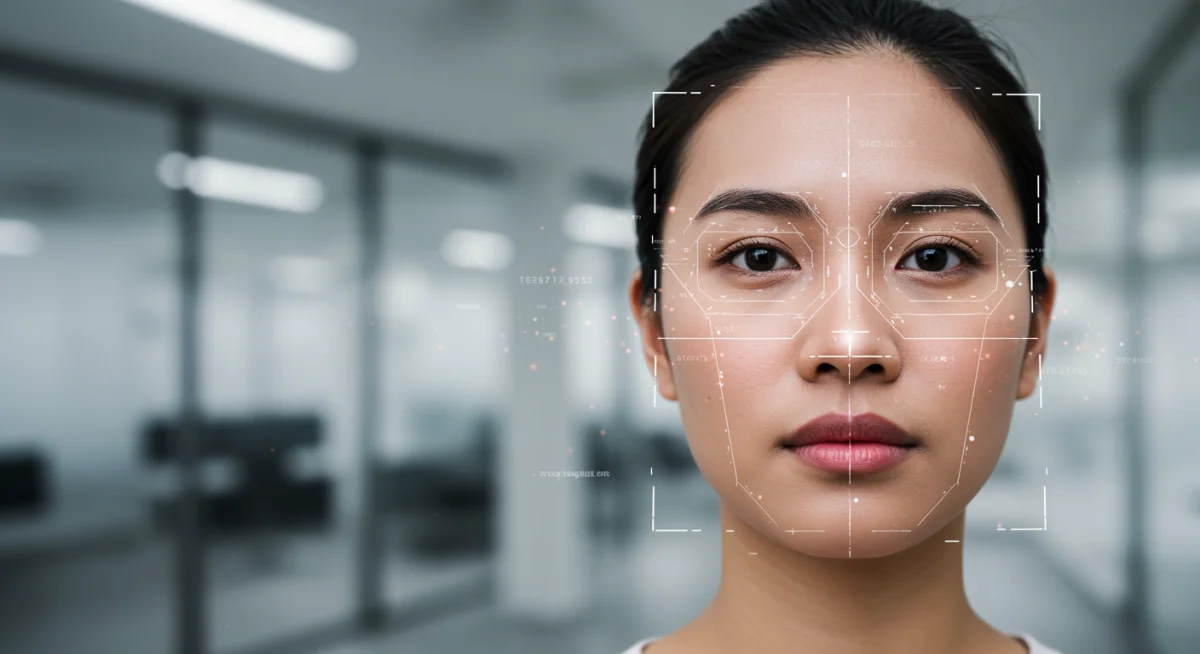
Facial recognition technology has arguably seen the most rapid and widespread adoption in recent years. By analyzing unique facial features, this technology can accurately identify and authenticate individuals. In 2026, advancements in 3D sensing, AI algorithms, and liveness detection will make facial recognition even more sophisticated and resistant to spoofing attempts. It’s already a common feature in smartphones, and its use is expanding into areas like airport security, retail payments, and access control for buildings.
How Facial Recognition Works
At its core, facial recognition involves several steps:
- Detection: A camera captures an image or video of a face.
- Analysis: Specialized software identifies key facial landmarks (e.g., distance between eyes, shape of jawline, depth of eye sockets). These landmarks are converted into a unique numerical code or ‘faceprint’.
- Comparison: The generated faceprint is compared against a database of stored faceprints.
- Verification/Identification: If a match is found within an acceptable threshold, the individual is authenticated or identified.
Modern systems incorporate machine learning to improve accuracy, particularly in varying lighting conditions, angles, and even with minor obstructions like glasses or masks.
Advantages of Facial Recognition
- Convenience: It’s a passive and contactless method, requiring minimal user effort. A quick glance is often all that’s needed.
- Speed: Authentication can be near-instantaneous.
- Scalability: Can be deployed in a wide range of environments, from personal devices to large public spaces.
- Non-intrusive (physically): Users don’t need to touch a sensor, which is beneficial for hygiene and accessibility.
Disadvantages and Challenges
- Privacy Concerns: The ability to identify individuals without their explicit consent in public spaces raises significant privacy issues.
- Accuracy & Bias: While improving, some systems still exhibit biases, particularly with different skin tones or lighting conditions, leading to potential misidentification.
- Spoofing: Despite liveness detection, sophisticated spoofing methods (e.g., high-resolution photos, 3D masks) remain a challenge, though less prevalent in 2026 due to advanced anti-spoofing measures.
- Storage of Biometric Data: The database of faceprints represents a significant target for hackers.
By 2026, expect facial recognition to be highly integrated into smart home systems, enterprise access control, and mobile payment platforms. The ethical considerations and regulatory frameworks surrounding its use will also be a major topic of discussion and development.
2. Fingerprint Recognition: The Enduring Touch of Security
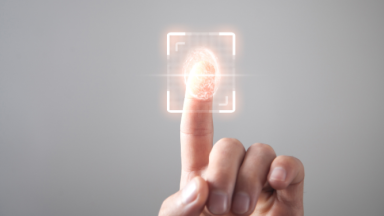
Fingerprint recognition has been a staple of biometric security for decades, evolving from bulky optical scanners to compact, highly precise capacitive and ultrasonic sensors. Its widespread adoption in smartphones, laptops, and various access control systems attests to its reliability and user acceptance. In 2026, fingerprint technology will continue to refine its capabilities, offering faster recognition and enhanced resistance to common spoofing techniques.
How Fingerprint Recognition Works
Fingerprint recognition relies on the unique patterns of ridges and valleys on a person’s fingertip:
- Enrollment: A sensor captures an image of the fingerprint. Software extracts unique features called ‘minutiae points’ (e.g., ridge endings, bifurcations).
- Template Creation: These minutiae points are converted into a mathematical template, which is then stored. The actual image of the fingerprint is rarely stored for security reasons.
- Verification: When authentication is requested, a new scan is taken, its minutiae points are extracted, and compared against the stored template.
Ultrasonic sensors, in particular, offer a higher degree of security by mapping the 3D details of a fingerprint, making them far more difficult to spoof with fake prints.
Advantages of Fingerprint Recognition
- High Accuracy: Fingerprints are highly unique and provide a strong basis for identification.
- Cost-Effective: Sensors are relatively inexpensive to produce and integrate into devices.
- User Familiarity: Most users are already accustomed to using fingerprint scanners on their devices.
- Compactness: Sensors can be very small, allowing for integration into a wide range of devices.
Disadvantages and Challenges
- Physical Contact Required: Can be inconvenient in certain situations and raises hygiene concerns.
- Environmental Factors: Dirt, moisture, cuts, or worn-out ridges can affect scanner performance.
- Spoofing: While advanced sensors are resistant, older or less sophisticated systems can be vulnerable to fake fingerprints made from molds.
- Enrollment Issues: Some individuals may have difficulty enrolling their fingerprints due to conditions affecting their skin.
By 2026, fingerprint sensors will likely become even more seamlessly integrated into screens and surfaces, offering invisible and instant authentication. Their role in securing mobile devices, payment terminals, and even smart locks will remain central to the Biometric Authentication 2026 landscape.
3. Iris Recognition: The Unmatched Precision of the Eye
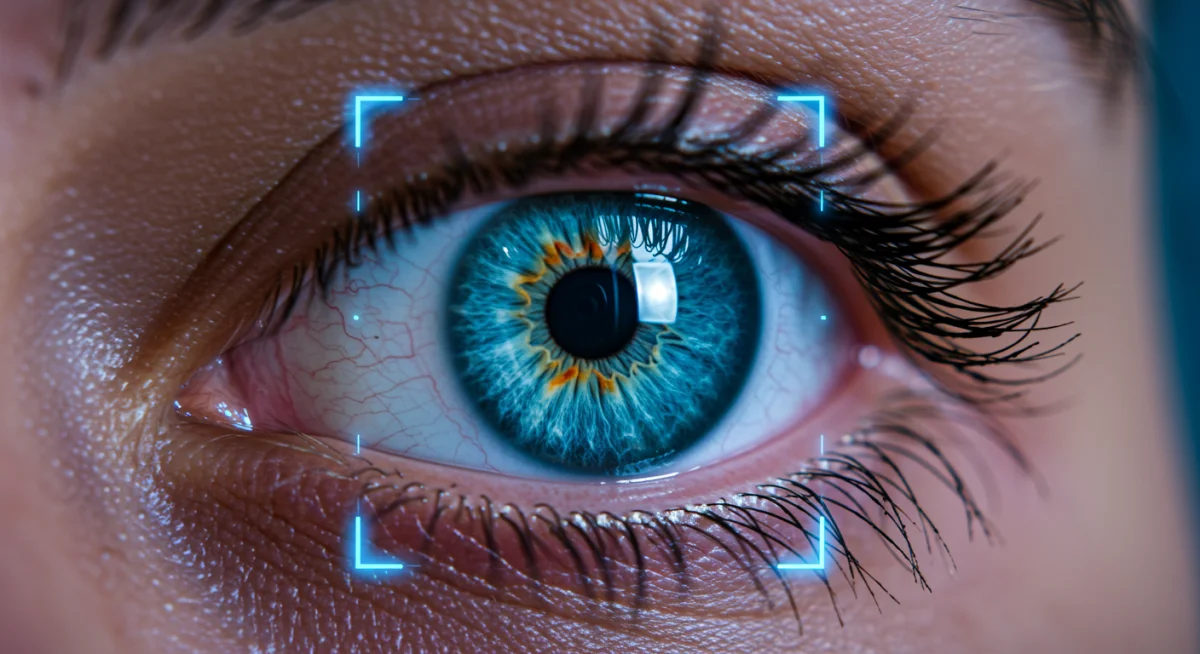
Iris recognition stands out as one of the most accurate and reliable biometric technologies available. The iris, the colored part of the eye, possesses an extraordinarily complex and unique pattern that remains stable throughout a person’s life. Unlike fingerprints, which can be altered or damaged, the iris is internally protected and difficult to replicate. In 2026, advancements in imaging technology and robust algorithms will further solidify iris recognition’s position in high-security applications.
How Iris Recognition Works
The process of iris recognition involves capturing a detailed image of the iris and analyzing its unique patterns:
- Image Capture: A specialized camera (often using near-infrared light to enhance pattern visibility) captures an image of the iris from a short distance.
- Pattern Extraction: Sophisticated algorithms identify and extract the intricate patterns of the iris, including crypts, furrows, and rings.
- Template Generation: These patterns are converted into a unique mathematical template.
- Comparison: The generated template is compared against a database of stored iris templates for verification or identification.
The complexity of the iris pattern provides an extremely high number of distinguishing features, making it highly accurate.
Advantages of Iris Recognition
- Exceptional Accuracy: Considered one of the most accurate biometric modalities, with extremely low false acceptance and false rejection rates.
- Uniqueness & Stability: Iris patterns are statistically unique for each individual and remain stable from childhood throughout life.
- Non-contact: Does not require physical contact, improving hygiene and user comfort.
- Difficult to Spoof: Highly resistant to spoofing due to the complex internal structure of the eye and liveness detection capabilities (e.g., pupil dilation, involuntary eye movements).
Disadvantages and Challenges
- Cost: Iris scanners tend to be more expensive than fingerprint or facial recognition systems due to specialized hardware.
- User Co-operation: Requires the user to position their eye correctly relative to the scanner, which can be challenging for some, especially those with certain disabilities or wearing glasses/contact lenses (though modern systems are improving in this regard).
- Lighting Conditions: Extreme lighting can affect image capture quality, although near-infrared illumination mitigates this.
- Perceived Intrusiveness: Some users may find the idea of having their eye scanned intrusive, despite its non-contact nature.
In 2026, iris recognition will continue to be a preferred choice for high-security environments like data centers, border control, and critical infrastructure. Its unparalleled accuracy makes it an ideal candidate for applications where identity verification is paramount, solidifying its place in advanced Biometric Authentication 2026 strategies.
4. Voice Biometrics: The Sound of Your Identity
Voice biometrics, or voice recognition, authenticates individuals based on the unique characteristics of their voice. Unlike speech recognition, which understands what is being said, voice biometrics focuses on who is speaking. These unique vocal traits, including pitch, cadence, accent, and pronunciation patterns, form a ‘voiceprint’ that is incredibly difficult to mimic. As AI and machine learning advance, voice biometrics in 2026 will offer more robust and natural authentication experiences, moving beyond simple phrase recognition to continuous authentication.
How Voice Biometrics Works
Voice biometric systems analyze various aspects of a person’s speech to create a unique identifier:
- Enrollment: The user speaks a series of words or phrases, which are recorded.
- Feature Extraction: Software analyzes acoustic features like frequency, rhythm, tone, and vocal tract characteristics to create a unique voiceprint.
- Template Storage: This voiceprint is converted into a mathematical template and stored.
- Verification: During authentication, the user speaks, and the live voiceprint is compared against the stored template.
Advanced systems can even detect subtle variations that indicate a recording or an imposter, using liveness detection and anti-spoofing algorithms.
Advantages of Voice Biometrics
- Convenience & Naturalness: Highly convenient and non-intrusive, especially for remote authentication or hands-free access.
- Remote Accessibility: Ideal for telephone banking, call centers, and smart assistants, allowing authentication from anywhere.
- Multi-factor Potential: Easily combined with other factors (e.g., a spoken password) for enhanced security.
- Continuous Authentication: Can continuously verify identity throughout a session, not just at the beginning.
Disadvantages and Challenges
- Environmental Noise: Background noise can significantly impact accuracy.
- Voice Changes: Illness (e.g., a cold), emotional state, or aging can alter vocal characteristics, potentially leading to false rejections.
- Spoofing: While improving, sophisticated voice synthesis and recordings can still pose a threat to less advanced systems.
- Enrollment Variability: Requires consistent voice input during enrollment for optimal performance.
By 2026, voice biometrics will be a cornerstone of customer service, smart home integration, and remote access solutions. Its ability to provide seamless, hands-free authentication makes it a powerful contender in the ongoing evolution of Biometric Authentication 2026.
Comparative Analysis: Security, Convenience, and Privacy in 2026
When evaluating these four leading biometric technologies for Biometric Authentication 2026, it’s essential to consider a balance of security, convenience, and privacy implications. Each modality offers a unique profile:
Security Levels
- Iris Recognition: Generally considered the most secure due to the extreme uniqueness and stability of iris patterns, and high resistance to spoofing.
- Fingerprint Recognition: Highly secure, especially with advanced ultrasonic sensors that capture 3D data. Vulnerabilities mainly exist with older, optical sensors.
- Facial Recognition: Security has improved dramatically with 3D sensing and liveness detection. Still, subtle spoofing techniques can be a concern for less sophisticated systems.
- Voice Biometrics: Good security, but potentially more susceptible to environmental factors and sophisticated voice synthesis attacks if not paired with strong anti-spoofing measures.
Overall, the trend in 2026 is towards multi-modal biometrics, combining two or more of these technologies to create an even more robust security posture, mitigating the individual weaknesses of each.
Convenience Factor
- Facial Recognition & Voice Biometrics: Offer the highest levels of convenience due to their contactless and often passive nature.
- Fingerprint Recognition: Very convenient, requiring a simple touch, but still physical contact.
- Iris Recognition: Requires a bit more user cooperation (positioning the eye), making it slightly less convenient than facial or voice, but still generally quick.
The ideal biometric solution for 2026 will be one that balances high security with minimal friction for the user, ensuring a seamless experience without compromising safety.
Privacy Implications
- Facial Recognition: Raises the most significant privacy concerns due to its potential for mass surveillance and the ability to identify individuals in public without their knowledge or consent.
- Iris & Fingerprint Recognition: Generally considered less privacy-invasive in their typical use cases (e.g., personal device unlock, controlled access points) because they require active user engagement. However, the storage of these unique identifiers still necessitates robust data protection.
- Voice Biometrics: Concerns can arise from continuous monitoring or the collection of voice data without explicit consent, especially in call centers or smart assistant interactions.
As Biometric Authentication 2026 becomes more pervasive, the ethical debates and legal frameworks surrounding data collection, storage, and usage will intensify. Transparency and user control over their biometric data will be crucial for public trust and widespread acceptance.
The Future of Biometric Authentication 2026: Key Trends and Innovations
Looking ahead to 2026, several key trends will shape the evolution and application of biometric authentication:
Multi-Modal Biometrics
The combination of two or more biometric modalities (e.g., facial and voice, or fingerprint and iris) will become increasingly common. This approach significantly enhances security by requiring multiple unique characteristics, making spoofing exponentially more difficult and improving overall accuracy. If one modality fails due to environmental factors, another can compensate.
Behavioral Biometrics
Beyond physical traits, behavioral biometrics will gain traction. This involves analyzing unique patterns in how a user interacts with devices, such as typing rhythm, mouse movements, gait, and even how they hold their phone. These ‘soft biometrics’ offer a continuous, passive layer of authentication, constantly verifying identity in the background without explicit user action.
Enhanced Liveness Detection
Anti-spoofing technologies will become even more sophisticated, using AI and machine learning to detect subtle signs of life (e.g., micro-expressions, blood flow, pupil dilation, involuntary movements) to differentiate between a live person and a replica or recording. This is critical for combating increasingly clever fraud attempts.
Edge Computing and Decentralized Biometrics
To address privacy concerns and reduce latency, more biometric processing will occur at the ‘edge’ – directly on the user’s device rather than sending raw biometric data to a central cloud server. Decentralized identity solutions using blockchain technology could also emerge, giving users more control over their biometric data templates.
Regulatory and Ethical Frameworks
As biometric use cases expand, expect more comprehensive global regulations governing their deployment, data storage, and user consent. These frameworks will aim to strike a balance between security needs and individual privacy rights, shaping how Biometric Authentication 2026 is implemented across industries.
Conclusion: Securing Tomorrow, Today
The journey towards a more secure and convenient digital world is inextricably linked to the advancements in Biometric Authentication 2026. Facial recognition, fingerprint scanning, iris recognition, and voice biometrics each offer distinct advantages and face unique challenges. While facial recognition leads in widespread consumer adoption and convenience, iris recognition excels in unparalleled accuracy for high-security environments. Fingerprint technology remains a reliable and cost-effective staple, and voice biometrics offers remarkable flexibility for remote and hands-free authentication.
As we move deeper into 2026, the convergence of these technologies, coupled with innovations in AI, behavioral biometrics, and robust privacy-preserving architectures, will define the next generation of identity verification. The ultimate goal is to create a seamless, impenetrable, and user-centric security ecosystem where our unique biological attributes serve as the most trusted keys to our digital lives. Businesses and individuals must remain informed about these evolving technologies to make strategic decisions that enhance security without sacrificing privacy or convenience. The future of authentication is here, and it’s uniquely personal.